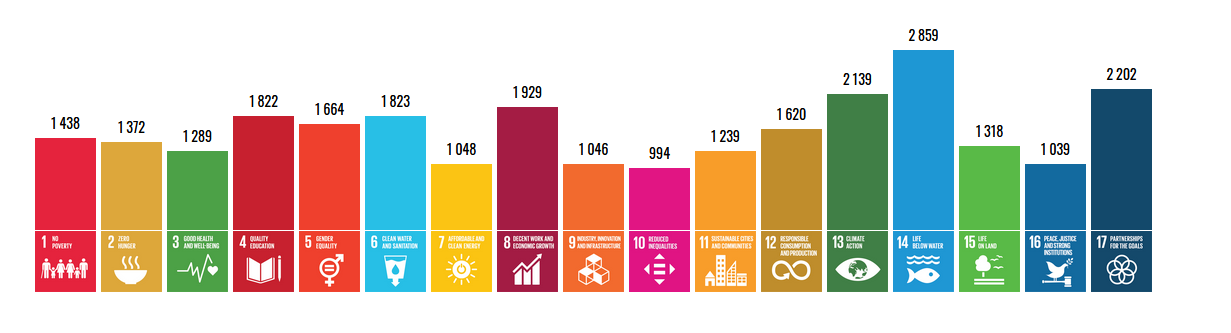
The SDG for Action Platform is a global registry of voluntary policies, commitments, multi-stakeholder partnerships and other initiatives made by governments, the UN system and a broad range of stakeholders to support acceleration of the UN Sustainable Development Goals (SDGs).Governments and other actors are encouraged to register their policies, initiatives or commitments that accelerate the implementation of one or multiple SDGs on the platform by filling out a form that seeks detailed information about each policy/initiative, including details of implementation, beneficiaries, budget and resources, timeline and evaluation.
Archives: Ressources
-

KNOCA
The Knowledge Network on Climate Assemblies (KNOCA) aims to improve the commissioning, design, implementation and impact of climate assemblies. The management group organises, commissions and supports network members to deliver a range of activities including learning calls and workshops, knowledge development projects and closed peer-to-peer workshops for policy makers and civil society organisations. As a network, they seek to:
- Understand the current wave of climate assemblies
- Document and disseminate best practice
- Identify and shape future trends so that climate policy and governance is strengthened through the application of robust climate assemblies.
-
UN Global Compact
The UN Global Compact intends to accelerate and scale the global collective impact of business by upholding the Ten Principles and delivering the SDGs through accountable companies and ecosystems that enable change. To make this happen, the UN Global Compact supports companies to:
- Do business responsibly by aligning their strategies and operations with Ten Principles on human rights, labour, environment and anti-corruption; and
- Take strategic actions to advance broader societal goals, such as the UN Sustainable Development Goals, with an emphasis on collaboration and innovation.
Explore who are the + 20,000 compagnies based in over 160 countries that are involved in the UN Global Compact.
-
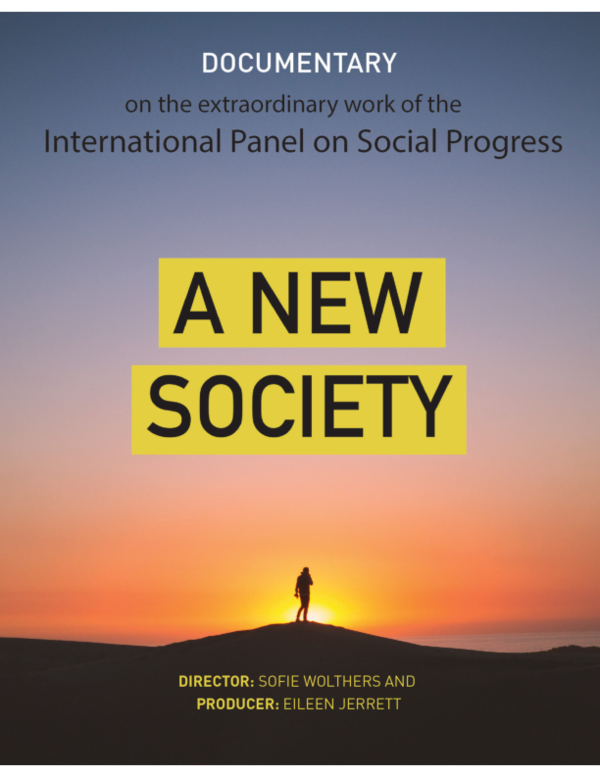
Documentary : A new society (2019)
The Panel has also inspired the documentary “A New Society” (2019) directed by Sofie Wolthers and produced by Eileen Jerret :
“What does social progress look like? What types of difficult decisions will our world face in the near future? A New Society follows a revolutionary collective of 300 academics dedicated to finding new solutions. Through candid interviews with renowned experts, the film examines innovative approaches to global threats such as climate change, income inequality, disease, and famine. This film aims to bridge the gap between policymakers, academia, and the general public to create a new civilization centered around tolerance, transparency, and human dignity.”
-
ISPS video resources
-
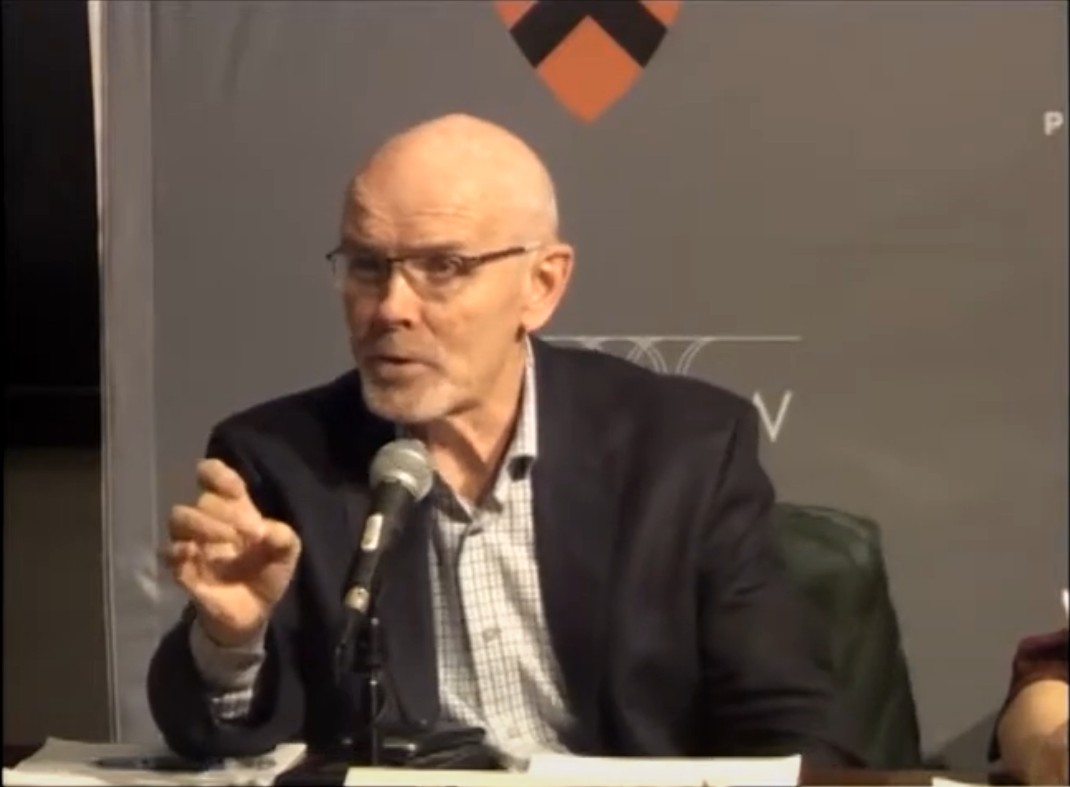
Video Spotlight: A Manifesto for Social Progress Ideas for a Better Society
At a time when the American society is deeply divided socially, politically, and culturally, and in a rapidly changing world facing serious environmental and developmental challenges, can we identify reasons for hope? The International Panel on Social Progress, gathering hundreds of researchers from all continents, publishes its first report, with resolute optimism about what is possible and great caution about what is likely to happen. The panelists will discuss human rights and global governance, cultural and religious trends, and how to address the populist challenge by more — not fewer — democratic initiatives. John Bowen, Dunbar-Van Cleve Professor in Arts & Sciences, Professor of Sociocultural Anthropology, Washington University in St. Louis Marc Fleurbaey, Robert E. Kuenne Professor in Economics and Humanistic Studies, Professor of Public Affairs and the University Center for Human Values, Princeton University Leslye Obiora, Professor of Law, The University of Arizona Philip Pettit, Laurance S. Rockefeller University Professor of University Center for Human Values, Princeton University Eldar Shafir, Class of 1987 Professor in Behavioral Science and Public Policy, Professor of Psychology and Public Affairs, Princeton University Moderator: Deborah Amos, Visiting Lecturer in The Council of the Humanities and Ferris Professor of Journalism, Princeton University; International Correspondent, NPR
-

“Symposium on the Report of the International Panel on Social Progress” in the Review of Social Economy, 2020
Symposia
Read full symposium.
- M. Fleurbaey, M.L. Salles-Djelic, “Progress is back“
- L. Talbot, “Why corporations inhibit social progress: a brief review of corporations from chapter 6 ‘Markets, Finance and Corporations. Does Capitalism have a Future?’”
- L. Campling, “Competitive accumulation, the geographical transfer of value, and global environmental change“
- A. Smith, “International panel on social progress: chapter on ‘The future of work – good jobs for all’“
- G. Grimalda, A. Trannoy, F. Filgueira, K.O. Moene, “Egalitarian redistribution in the era of hyper-globalization“
- S. Reid-Henry, “Inequality and Democracy: A response to the International Panel on Social Progress (IPSP) Report 2018“
-
“Symposium on the Report of the International Panel on Social Progress 2018” in Economics and Philosophy, 2018
Symposia
Read full symposium.
- A. Raubo, A. Voorhoeve, “Introduction to the symposium“
- M. Adler, M. Fleurbaey, “In pursuit of social progress“
- U. Rani, “Comment on Ch. 3, Economic inequality and social progress“
- D. Alarcón, “Comment on Ch. 7, The future of work, good jobs for all“
- A. Rocha Menocal, “Comments on Ch. 9 and 14, Inequality, democracy and the rule of law“
- J. Deane, “Comments on Ch. 13, Media and communications“
- M. Adler, M. Fleurbaey, “Response to our commentators“