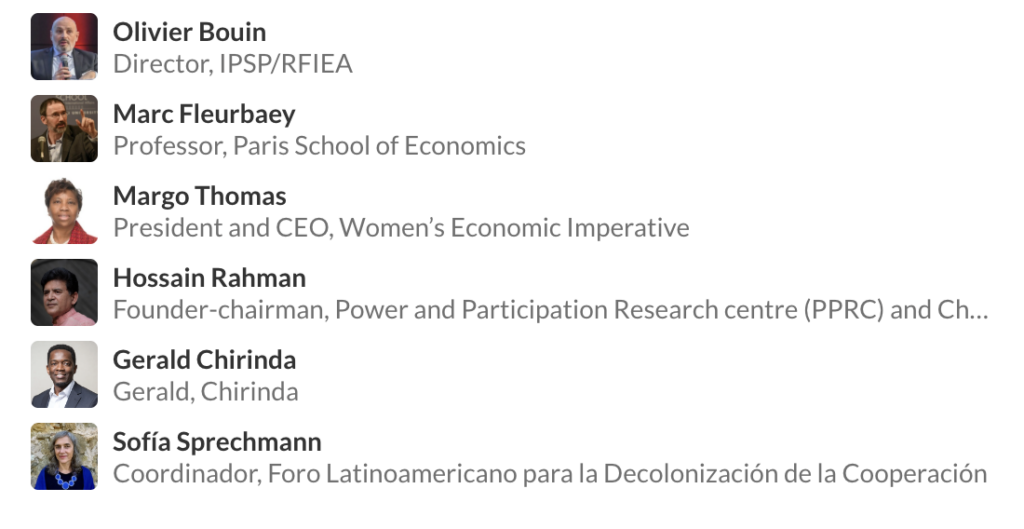

Organized by the International Panel on Social Progress, the first edition of the Global Social Progress Week was a worldwide gathering dedicated to advancing collective intelligence for action. The event brought together academics, policymakers, civil society leaders, philanthropists, and international organizations to explore systemic solutions to today’s interconnected crises.
Hosted across regional anchors in Africa, Asia, Europe, Latin America, North America, and the Pacific, the event combines plenary sessions, thematic debates, and side events on topics such as new measures of prosperity, drivers for systemic transformation, human security, global solidarity, and technological change.
Watch the replays of all sessions held during the last week of October 2025
DAY ONE
Context
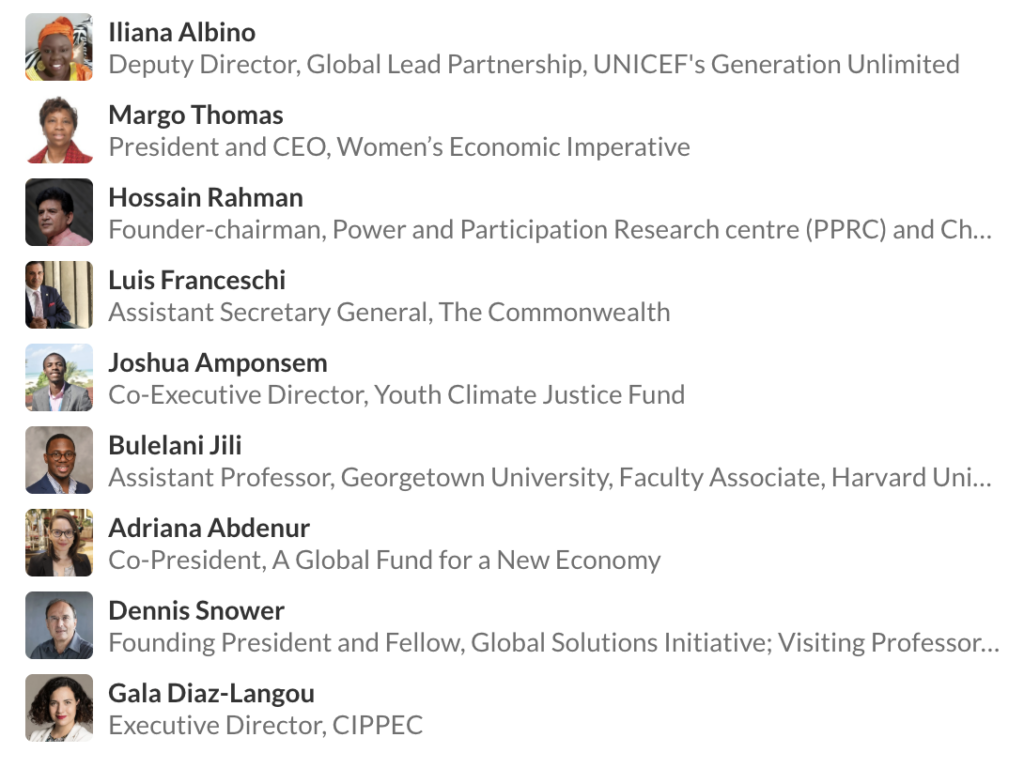
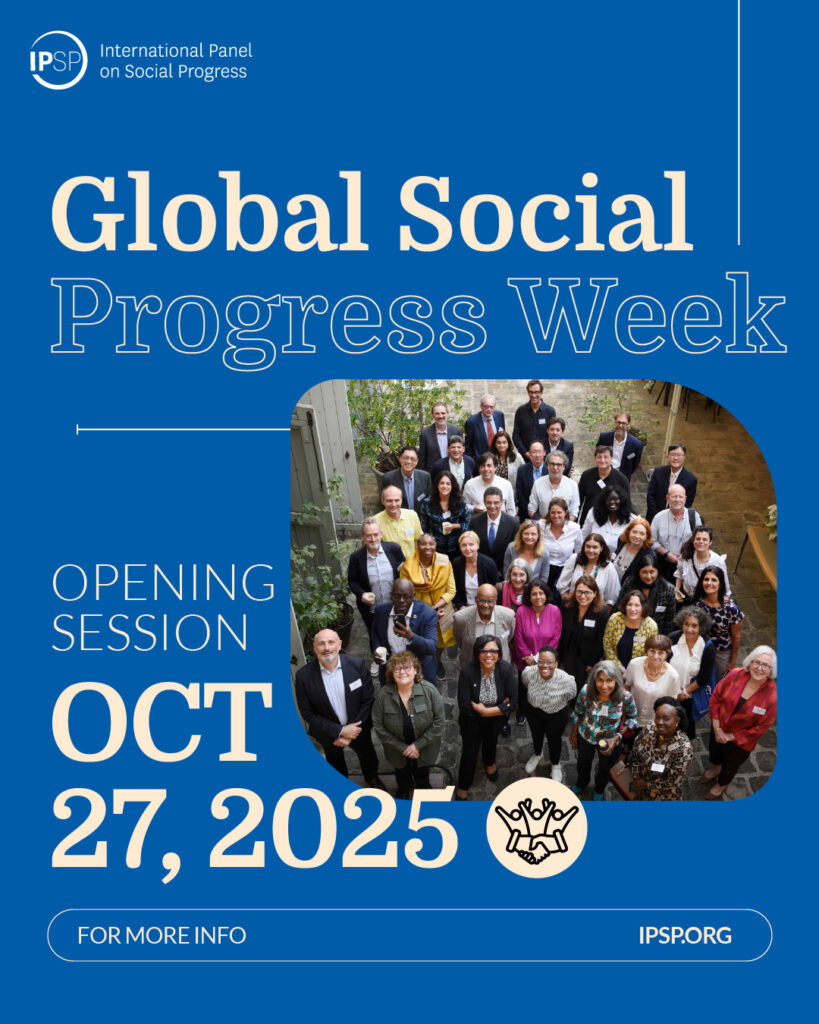
The opening session brought together researchers, practitioners, and advocates from across the Global North and South to frame the key social, economic, and planetary challenges of the current moment and identify pathways toward transformation. The overarching diagnosis was shared: the world is experiencing a polycrisis — interlocking failures of economic models, democratic institutions, ecological systems, and technological governance — that demands systemic, not incremental, responses.
The old economic order is failing, and the alternatives on offer are insufficient
Abdenur argued that neoliberalism has delivered insecurity for majorities and extreme concentration of wealth, with the top decile capturing nearly all gains from growth. The reaction now taking hold — nationalist, punitive, unilateral — feeds on the very disenfranchisement neoliberalism created. Neither path leads to shared well-being. What is needed, she argued, is a genuinely new economy organized around dignity, sustainability, care, and democratic participation rather than short-term profit extraction.
Poverty must be understood as a multidimensional, systemic phenomenon Snower made the case that income-based poverty metrics are radically insufficient. His empirical work shows that those at the bottom of the income ladder are typically also at the bottom of agency and solidarity ladders simultaneously — a compounding catastrophe. Effective poverty reduction requires measuring and addressing voice, community embeddedness, decent work, and environmental conditions alongside income. Rahman added that poverty reduction must also change its language: the poor are not passive targets but co-creators and co-actors in change.
AI and digital technology will deepen existing inequalities unless governed intentionally
Both Snower and Jili pressed this point with particular force. Jili argued that Africa is currently positioned as the “janitorial staff” of AI — cleaning data and supplying minerals — rather than participating meaningfully across AI value chains. Without deliberate intervention, the digital inflection point will reproduce colonial hierarchies in new code. He called for investments in local data infrastructure, human capital, and connectivity to be reframed not as charity but as acts of justice and sustainability. Abdenur pointed to the political economy of AI as a driver of wealth concentration that is already visible in Brazil and elsewhere.
The social fabric is fraying and this is as much a crisis as the economic one
Diaz-Langou identified a rupture of interpersonal trust as the common thread running beneath all other crises. People are increasingly disconnected not only from institutions but from each other, fueling loneliness, loss of purpose, and declining birth rates. This disaffiliation makes collective action harder precisely when it is most needed. Rebuilding social progress requires re-embedding the economy in society, investing in social infrastructure, and co-creating policies with citizens rather than delivering them from above.
Youth are architects of change, not just beneficiaries, but they remain systematically excluded
Albino and Amponsem both made this case forcefully. Amponsem noted that less than 1% of funding from the world’s largest foundations reaches youth-led climate justice solutions, despite young people driving some of the most significant recent policy advances. Albino was more candid: even in platforms explicitly designed for youth partnership, young people are the first to be cut when accommodating institutional egos. The structural exclusion of youth from decision-making undermines the very coalitions being built.
Policy without implementation – and without purpose – changes nothing
Rahman issued a challenge to the assembled thinkers and doers: technocracy has a remarkable ability to persist between paradigms, producing well-intentioned initiatives that lose sight of impact on the ground. Implementation must be elevated to the level of policy concern from the outset, across macro, meso, and micro levels. The question is not only what policies to adopt, but with what ethos, toward what outcomes, and with what understanding of power.
Points of Convergence
Speakers agreed on several structural points: that the crises are interconnected and cannot be addressed in isolation; that GDP-based metrics of progress are inadequate and should be replaced by multidimensional well-being frameworks; that the Global South must be a co-creator of norms, not a recipient of solutions designed elsewhere; and that collective action is the only viable path — but requires rebuilding the trust that makes it possible.
Take-aways
- Move from income-only to multidimensional poverty and well-being metrics across G20 policy frameworks
- Reframe AI governance around beneficiation, local capacity, and data sovereignty — not just safety and efficiency
- Invest in social infrastructure (care networks, participatory institutions, community spaces) as a precondition for collective action
- Treat implementation as a first-order policy concern, not an afterthought
- Resource youth-led organizations directly and structurally, not symbolically
- Build coalitions that are genuinely plural — across North and South, across sectors — and that include those most affected by the decisions being made
DAY TWO
Living wage

Drivers of systemic transformation: rethinking the developmental state
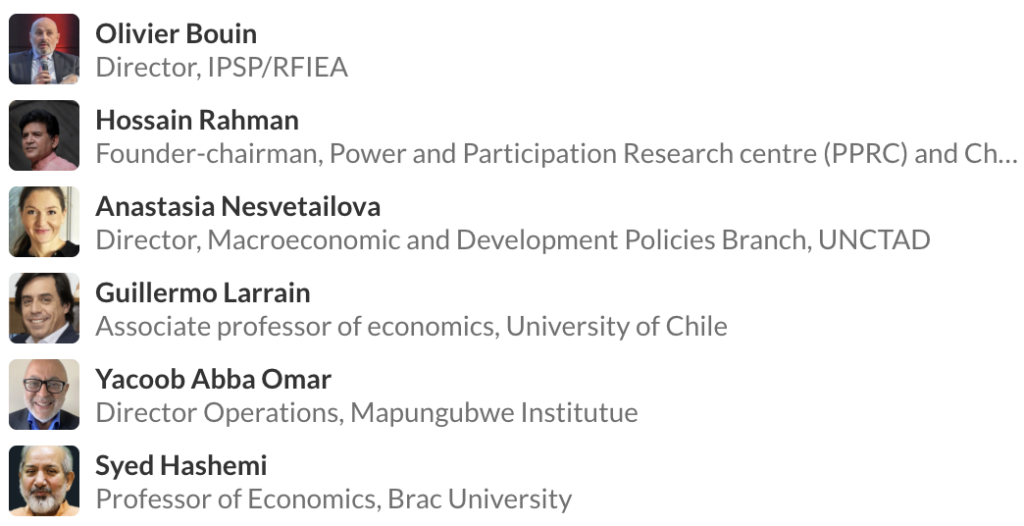

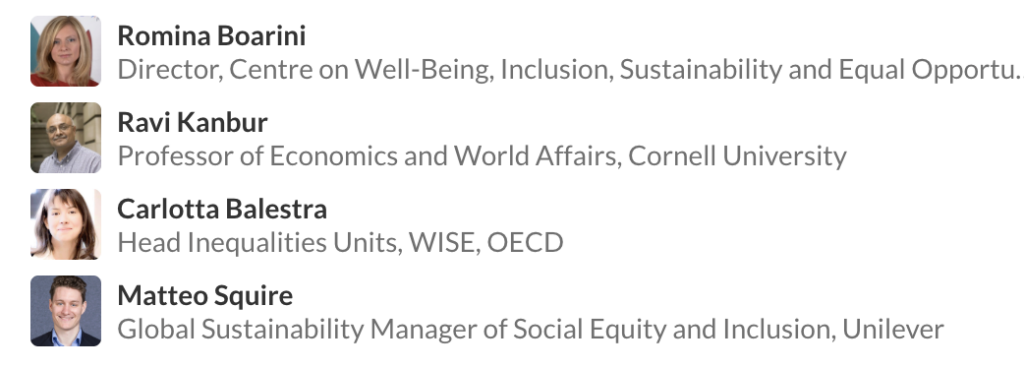
The session examined whether and how the developmental state can be reimagined in a context marked by corporate concentration, populism, rapid technological change, environmental crisis, and weakening trust in institutions. Originally formulated around post–Second World War experiences, particularly in East and Southeast Asia, the developmental state combined structural transformation, welfare provision, state-led capital mobilization, and capable governance. The question today is whether that model remains viable and what form it should take.
Anastasia Nesvetailova outlined the classical developmental state through five pillars. First, carbon-intensive industrialization and structural transformation aimed at poverty reduction and integration into global markets, premised on open export opportunities. Second, strong human capital embedded in collective social structures prioritizing national development. Third, coordinated trade and credit policies, often under favorable geopolitical conditions. Fourth, a proactive, competent bureaucracy with planning capacity and industrial policy coherence. Fifth, accountability mechanisms that made policy performance visible and correctable.
This model delivered measurable results: East Asia’s growing share of global output reflected the success of manufacturing-led growth and managed trade, often described as the “flying geese” pattern of regional catch-up. However, the underlying assumptions are now under strain. Climate constraints limit carbon-intensive industrialization. Demographic aging alters labor dynamics. Corporate structures have fragmented into opaque private conglomerates alongside powerful state-backed firms and sovereign wealth funds. Technological transformation and geo-economic rivalry have replaced rule-based trade with uncertainty.
The rise of a post-industrial, service-based economy introduces further complexity. Services and intangible activities are harder to measure, regulate, and coordinate. Manufacturing trade has plateaued relative to GDP since 2008, while new forms of digital and intangible exchange remain poorly understood. Policymakers face a dilemma: service-led, weightless economies are difficult to tax and govern, yet countries that have maintained manufacturing employment appear to enjoy more stable growth and less populist backlash. The central challenge is adapting the developmental state to an innovative, less transparent economic system.
Guillermo Larraín reframed the discussion through the lens of the social contract. In the 1990s, globalization was associated with expanding opportunities; today, it is often perceived as generating threats, fueling populism. A renewed developmental state must begin with basic guarantees: security, property rights (including environmental rights), and equality before the law. In Latin America, organized crime, environmental degradation, and concentration of power undermine these foundations. Technological change increases productivity but also produces fear of job displacement and social fragmentation. For Larraín, a precondition of the developmental state is an “insurer state” capable of managing environmental, labor-market, and social risks. Without credible risk protection, growth strategies lose legitimacy.
Yacoob Abba Omar examined South Africa’s experience. After the 2008 crisis, the country revisited Asian models of developmentalism. Lessons included the importance of a strong “pilot agency” coordinating industrial policy. Yet South Korea’s experience also showed that external-facing departments could pursue developmental goals while domestic departments remained shaped by patronage. Institutional flexibility—seen in Singapore’s task forces or Taiwan’s sectoral boards—may be more important than rigid replication. South Africa combined elements of a welfare and investment state, channeling significant resources into education, health, and social grants. A coalition once linked segments of business and state bureaucracies, but this settlement weakened amid persistent unemployment, low growth, fractured political alliances, and mistrust between business and government. The country’s dependent position in the global economy constrains policy autonomy. The developmental state remains partly aspiration, partly incomplete project, raising the question of how to reconcile long-term strategy with short-term populist pressures.
Syed Hashemi focused on the welfare dimension. The postwar welfare state’s ideals were undermined by weak economic management, while neoliberalism prioritized markets at the expense of human dignity. A renewed developmental state must combine market dynamism with social justice. In many developing contexts, markets function through clientelist capitalism rather than competitive dynamism. Reform requires inclusive growth, social citizenship, redistributive justice, democratic accountability, and regulation of monopolies and speculative finance—while maintaining fiscal discipline and effective governance. Bangladesh illustrates both constraints and opportunities. Numerous fragmented social protection programs already exist—health, education, employment, disaster relief, women’s empowerment, and climate adaptation initiatives—creating a foundation for a universal, cost-effective social protection regime. A tacit cross-party commitment to poverty reduction provides space for reform. Rather than waiting for a comprehensive political coalition, incremental strengthening of welfare systems could generate momentum for broader transformation.
The debate returned to coalitions and institutional trust. Olivier Bouin emphasized the need for new coalitions linking public and private actors, civil society, and the informal sector. Mistrust among actors is rising. Civil society itself faces questions of representativeness and accountability. Larraín suggested institutional innovations such as citizens’ assemblies, where randomly selected participants deliberate outside established power structures, potentially restoring trust.
Nesvetailova argued that technocratic adaptation alone is insufficient. The intangible economy – driven by intellectual property, digital platforms, and financialized valuation – escapes traditional macroeconomic measurement and regulation. Statistical systems built around agriculture and manufacturing lag behind economic reality. Invisible financialized activities and informal sectors complicate governance. Technological capacity to measure exists, but political coordination and analytical shifts are lacking. Without socio-political rebalancing, corporate sovereignty—empowered by technology and shielded by political influence – may dominate. Civil society, now more professionalized and globally connected, represents a third actor beyond the state–market dichotomy and must be integrated into multi-level coordination, particularly in areas such as global food systems and climate resilience.
Hossain Rahman underscored unresolved tensions. The developmental state remains a powerful concept, but enabling conditions have changed. Many countries face entrenched corruption, elite capture, and institutional dysfunction. Growth remains linked to social justice, yet priorities may need recalibration. Corporate power and inequality have reached unprecedented levels, complicating coalition-building.
Overall, the session suggests that rethinking the developmental state requires three interlinked shifts: adapting to an intangible, climate-constrained global economy; rebuilding the social contract through risk management and inclusive growth; and constructing new coalitions capable of restoring trust and sustaining long-term strategic orientation. The developmental state of the 21st century cannot simply replicate its industrial predecessor; it must integrate technological transformation, environmental limits, social protection, and participatory innovation into a renewed framework for systemic transformation.
What conditions for Information to remain a Public Good in the Age of AI?

Reclaiming Information as a Public Good in the Age of AI
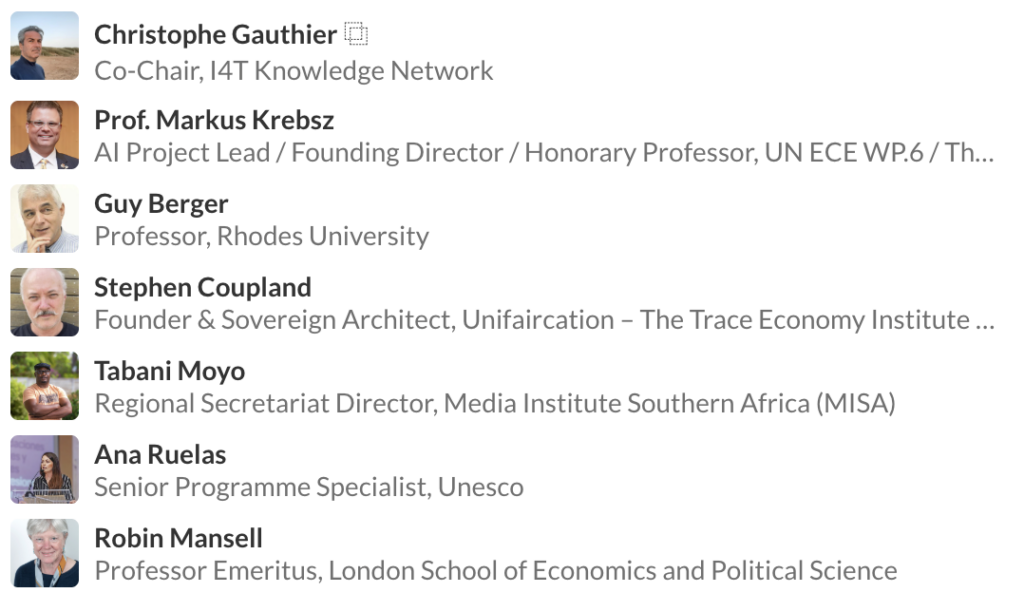
The digital revolution has reshaped how we access and share information, but at what cost? The International Panel on Social Progress (IPSP) Working Group on Information as a Public Good recently convened a critical discussion on the eroding integrity of information in an era dominated by AI, corporate platforms, and fragmented governance. Moderated by Guy Berger and Christoph Gauthier, the conversation explored whether we can reform the current system from within—or if we must build entirely new structures to ensure information remains a public good rather than a commodified resource.
The Broken Information Order
Over the past decade, the internet has been celebrated for democratizing access to knowledge. Yet, as Guy Berger noted, much of what circulates online today is not reliable public-interest information, but rather entertainment, advertising, and misinformation. Generative AI has accelerated this trend, flooding digital spaces with deepfakes, scams, and algorithmically amplified biases. Even public goods like Wikipedia are exploited by AI systems without proper attribution or compensation, while conversational AI—designed for individualized engagement—further fragments shared understanding.
The core dilemma, as Berger framed it, is whether we should work within existing power structures—pushing for transparency and incremental reforms—or build parallel systems that prioritize information integrity from the ground up. Christoph Gauthier leaned toward the latter, advocating for “regenerative AI”—a model that redistributes power to users and creators rather than consolidating it in the hands of tech giants.
Global Inequities and the Need for Local Solutions
One of the most striking themes was the disproportionate impact of these challenges on the Global South. Tabani Moyo, director of the Media Institute of Southern Africa, described how fragmented regulations and elite control of information have left many African nations vulnerable to exploitation by both global tech platforms and local power structures. His call for South-South alliances—such as a repurposed African Union—highlighted the need for collective negotiation with tech giants, rather than leaving individual countries to fend for themselves.
Robin Mansell reinforced this point by critiquing the Global North’s dominance in research and policy. Most studies focus on individual behaviour rather than systemic power imbalances, ignoring community-led alternatives that could restore information integrity. She pointed to decentralized data governance models, such as federated platforms and local data cooperatives, as proof that bottom-up solutions not only work but are often more effective than top-down regulations. The challenge is funding and scaling these initiatives so they can compete with Big Tech’s monopolies.
Ana Ruelas of UNESCO echoed this sentiment, emphasizing that information as a public good must be rooted in human rights – specifically, freedom of expression and access to information. However, she acknowledged that regulation alone is insufficient without user empowerment, transparency, and accountability. In non-democratic contexts, where governments may weaponize AI, the solution lies in multi-stakeholder governance, ensuring that civil society, media, and tech platforms all play a role in upholding integrity.
Innovations in Governance and Economics
The discussion also turned to concrete solutions, from technical fixes to policy reforms. Stephen Coupland introduced the concept of a “trace economy”, a hashtag-based system that would allow creators to log and track their work across platforms. By embedding attribution into the fabric of the internet, this model could restore IP rights, reduce corporate liability, and even include the Global South—since anyone with a phone could participate. Coupland drew a parallel to China’s “kill six flies” campaign, where millions of people were mobilized for a small but collective task. Similarly, trace logging could crowdsource accountability, ensuring that AI systems credit—and compensate—original creators.
On the policy front, Markus Krebsz discussed the UN Economic Commission for Europe (UNECE)’s framework for regulating AI-embedded devices, from smartphones to humanoid robots. While the guidelines exclude autonomous weapons (due to lack of consensus) and self-driving cars (covered by another UN body), they address socioeconomic risks like power centralization, inequality, and job displacement. Krebsz warned that current regulations are fragmented—with the U.S., EU, and China pursuing divergent approaches—and argued that only a UN-level framework could harmonize governance for borderless issues like AI.
Yet, as Guy Berger reminded the panel, “free” internet access is an illusion—users are the real product, their data and attention extracted for profit. The question, then, is how to reclaim agency. Christophe Gauthier proposed a dual strategy: pressuring platforms for transparency while simultaneously building regenerative alternatives that prioritize human rights over engagement metrics.
A Call to Collective Action
The conversation closed with a sense of urgency but also possibility. Olivier Bouin, executive co-director of IPSP, highlighted upcoming sessions on AI ethics, responsible economies, and regenerative democracy, underscoring that these issues are interconnected. The path forward requires:
- Strengthening global governance through UN-led standards that transcend national borders.
- Funding and scaling grassroots innovations, from decentralized data models to trace logging systems.
- Shifting cultural narratives to value information integrity over profit-driven engagement.
As Christophe Gauthier put it: “We are the resource being extracted. The question is: How do we turn the negotiation table around?” The answer lies in collective action, whether through hashtag activism, policy advocacy, or community-led platforms, to ensure that information serves humanity, not corporate interests. The work has only just begun, but the tools and ideas are already here. The challenge now is implementation.
Ecological Rule of Law


The session examined the evolution, foundations, and future of the Ecological Rule of Law. The objective is to contribute to the ecological transition by adapting legal and institutional systems to environmental realities and developing practical tools for implementation.
Foundations and Conceptual Framework
Justice Ricardo Lorenzetti traced the origins of the concept to Rio+20 and subsequent judicial cooperation initiatives, including collaboration with the International Union for Conservation of Nature. Since the Stockholm Conference, a global consensus has gradually emerged linking environmental protection with the Rule of Law.
A central theoretical distinction structures his approach:
- The individual right to a healthy environment.
- The environment as a collective, indivisible good requiring systemic protection.
The Argentine Supreme Court has adopted the second view. The environment must be protected as a system — geocentric rather than purely anthropocentric — because environmental goods such as water, biodiversity, or ecosystems are indivisible and cannot be reduced to private property. For instance, rivers must be managed at the basin level rather than fragmented along administrative boundaries. This systemic approach often requires institutional redesign. Lorenzetti expressed reservations about recognizing “rights of nature.” While adopted in countries like Bolivia and Ecuador and in certain court decisions in India and Colombia, this model would require redesigning the entire legal system and clarifying which elements of nature hold rights and duties. He argues that similar outcomes can be achieved more coherently by protecting the environment as a collective good within existing legal traditions.
Property, Sustainability, and Legal Harmonization
Environmental protection requires redefining the limits of property and economic rights. Argentina’s Civil and Commercial Code establishes that individual rights must not be exercised abusively in ways that harm collective environmental goods. Enterprise and consumption are legitimate but must comply with sustainability standards. Lorenzetti also stressed that environmental law should remain systemic. Climate change is a component of the environmental system; fragmenting it into isolated legal categories weakens coherence.
To strengthen environmental protection, he integrated it into the broader concept of the Rule of Law. This “Environmental Rule of Law” incorporates classical legal principles such as access to information, transparency, progressivity, and non-regression. Just as fundamental rights should not regress, environmental protections should not be weakened during political shifts.
A key innovation is the extension of traditional protective principles. Law has historically protected the weaker party; nature is now the vulnerable party. Hence the principle in dubio pro natura: when in doubt, decide in favor of environmental protection.
Paradigm Shift and Democratic Renewal
Environmental protection is not a niche specialization but a paradigm shift affecting constitutional, administrative, and private law. It also reinforces democracy. Institutional inefficiency undermines public trust and fuels authoritarian promises of efficiency. Strengthening environmental governance therefore supports democratic resilience. Lorenzetti noted that current challenges extend beyond nature to technological transformations such as artificial intelligence. The pandemic demonstrated the interdependence of environmental and human health, reinforcing the need for systemic protection.
Reflections and Challenges
Professor Blanca Soro Mateo emphasized that law must adapt to cultural, social, and environmental change. The Ecological Rule of Law requires rethinking property, collective goods, and governance structures while integrating ethical transformation — shifting from domination of nature to care and restoration. In Spain, constitutional recognition of the right to an adequate environment as a guiding principle has gradually expanded through constitutional and European jurisprudence. Without radical reforms, strengthening this principle could permeate the entire legal order. However, concerns remain about regression: privatization of controls, regulatory fragmentation, emergency legislation, and weakened sustainability standards. Lorenzetti responded that history moves through advances and setbacks; what is most dangerous is resignation. The real risk is erosion of the broader Rule of Law and democratic consensus.
Global Expansion
Despite current political headwinds, progress continues through judicial networks and international forums. Latin America plays a leading role in developing and disseminating the concept. The aim is to build a global community capable of translating the Ecological Rule of Law into effective institutional practice.
Ultimately, the Ecological Rule of Law represents a transformation of legal thought: embedding environmental protection at the core of democratic governance and aligning legal systems with the ecological realities of the planet.
Creative resolve in collective action for public health and social progress


This session examined how creative resolve, solidarity, and collective action can address major public health challenges in an era of polycrisis. Centered around a documentary film on global pandemic preparedness, the discussion highlighted lessons from past global health successes and failures, particularly COVID-19, to explore how ethical change, institutional reform, and community engagement can support equitable health outcomes.
Polycrisis, pandemics, and global vulnerability
Speakers emphasized that pandemics expose shared global vulnerability. Diseases do not respect borders, identities, or political systems, yet global responses remain fragmented. COVID-19 illustrated deep weaknesses in global governance, preparedness, and equity. Over six million people died, economic losses exceeded $12 trillion, and access to vaccines and essential tools was highly unequal.
The pandemic revealed a mismatch between rapid scientific innovation and slow, inequitable delivery. While vaccines were developed in record time, only 17% of people in low-income countries accessed even one dose. Stockpiling, intellectual property monopolies, and national self-interest undermined global solidarity.
Creative resolve and solidarity
The film and discussion introduced creative resolve as a fundamental commitment to finding solutions to seemingly insurmountable problems, combined with solidarity, understood as collective, imaginative action to ensure everyone can live well enough. Historical examples illustrated this approach:
- Smallpox eradication, achieved through global cooperation, adaptive strategies, and flexibility even during the Cold War
- HIV/AIDS treatment scale-up, driven by activism, generic production, and reduced prices, transforming access in low- and middle-income countries
These cases showed that global health breakthroughs depend not only on technology, but also on political will, ethical commitments, and collective action.
Innovation beyond technology
A key theme was the need to balance technical innovation (vaccines, medicines, diagnostics) with social and institutional innovation. Technical innovation alone is insufficient without:
- Functional health systems
- Community trust and engagement
- Trained health workers
Infrastructure such as roads, cold chains, and data systems
Community health workers, task-shifting, telemedicine, and localized health delivery were highlighted as effective strategies, particularly in resource-constrained settings. However, speakers stressed that these approaches should complement, not replace, broader investments in doctors, hospitals, and advanced technologies.
Health systems, equity, and governance
Rapid urbanization, especially in Africa and parts of Asia, is reshaping health risks. Growing informal settlements strain housing, water, sanitation, and health services, increasing vulnerability to epidemics. Health must be embedded across all policies. Public health outcomes depend on governance, infrastructure, climate resilience, education, and economic systems. Youth engagement and local leadership are essential. The discussion emphasized the importance of bridging academia and practice, aligning scientific research with community realities, and involving local, subnational, national, and regional actors in decision-making.
The pandemic agreement as an example of creative resolve
The WHO Pandemic Agreement was presented as a concrete outcome of global creative resolve. Supported by 124 countries, it establishes a rule-based framework focused on:
- Equity in access to vaccines, diagnostics, and therapeutics
- Inclusive global governance
- Health system strengthening and workforce protection
- Coordinated financing mechanisms
While the pathogen access and benefit-sharing annex remains under negotiation, the agreement represents a historic step toward fairer and more prepared global health systems.
Key takeaways
- Pandemics are global problems requiring global solutions
- Scientific innovation must be paired with equitable access and strong systems
- Solidarity and creative resolve are essential ethical foundations
- Community engagement and local capacity are central to resilience
- Global agreements matter, but implementation and inclusion are decisive
The session concluded that public health progress depends on collective imagination, ethical commitment, and sustained cooperation, with creative resolve enabling societies to transform crises into opportunities for more equitable and resilient futures.
AI and social progress
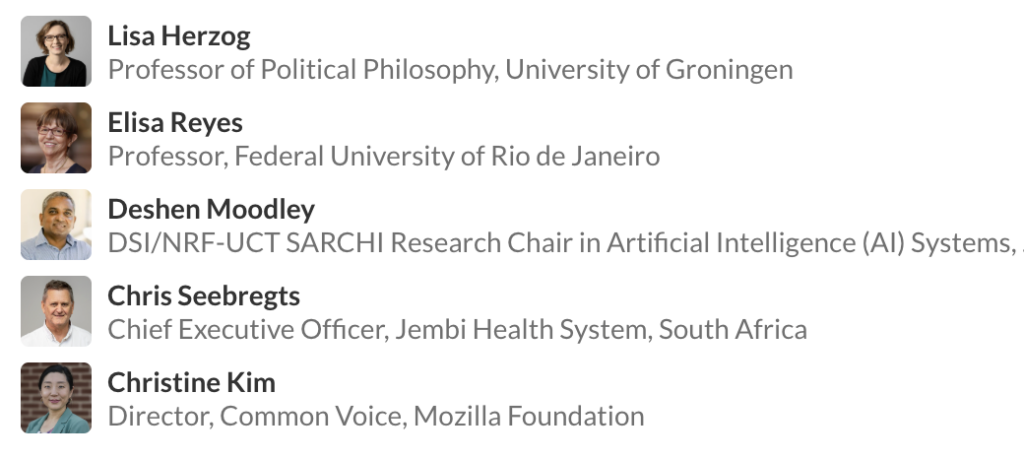

This session explored how artificial intelligence and digital technologies can contribute to social progress in a world marked by deep and persistent inequalities, both within countries and between them. While AI promises productivity gains and innovation, its current trajectory raises concerns about concentration of power, widening digital divides, and diminished sovereignty for developing countries.
A central concern is that AI development is largely driven by commercial interests and major technology companies based in advanced economies. As frontier models become more powerful and resource-intensive, the capacity of low- and middle-income countries (LMICs) to shape AI for their own development risks shrinking. Without deliberate policy intervention, AI could reinforce existing global hierarchies rather than reduce inequality.
Public AI and Digital Public Infrastructure
One major concept discussed was public AI – AI systems developed and governed for the public good rather than purely for profit. This idea raises the possibility that certain AI infrastructures could become comparable to public utilities, such as water or electricity, accessible and accountable to society as a whole.
Public AI is closely linked to the development of Digital Public Infrastructure (DPI) and Digital Public Goods (DPGs). Rather than building closed, end-to-end state systems, DPI focuses on creating minimalist, interoperable foundational layers that enable innovation by many actors. Governments often lead these efforts, sometimes with support from international organizations such as the United Nations.
India’s “India Stack” was highlighted as a powerful example. By building a universal digital ID system and open payment infrastructure (the Unified Payments Interface), India created foundational digital layers that enabled rapid innovation and dramatically expanded financial inclusion. Instead of competing with private firms, this infrastructure lowered barriers to entry and allowed both public and private actors to build services on top. The example parallels earlier public investments such as GPS and the internet, which became transformative once opened for broad use.
The lesson is that AI policy should not focus solely on end-user applications but on building foundational infrastructure that fosters widespread participation in innovation. The objective is not merely democratized consumption of AI tools but democratized capacity to build and shape them.
Governance, Political Economy, and the Question of Control
AI operates within a broader political economy. Economic activity is shaped by laws, industrial policies, competition rules, and regulatory frameworks. Antitrust actions and AI regulations in the EU, US, and other jurisdictions illustrate that political actors are already intervening in AI governance. The key issue is not simply whether systems are open-source or proprietary. The distinction between open and closed models is not binary: some of the most important AI frameworks, such as TensorFlow and PyTorch, were open-sourced by large corporations and accelerated global AI development. The more fundamental question concerns control and direction—who defines priorities, governs data, and captures value.
The Mozilla Data Collective was presented as an example of leveraging existing legal and technical tools to rebalance power. By enabling communities to share datasets under legally binding licenses, it provides mechanisms for non-commercial use restrictions and layered accountability. These include legal agreements, governance oversight, and technical tools such as watermarking and dataset fingerprinting. While none are foolproof, combining them increases enforceability and empowers data contributors.
The broader point is that democratizing AI requires working simultaneously at multiple levels: regulatory frameworks, technical design, governance mechanisms, and capacity building.
Lessons from Digital Health in LMICs
Experience from digital health in sub-Saharan Africa and South Asia provides practical insights into building public-oriented digital ecosystems. Over many years, open-source digital public goods—such as open medical record systems and health information exchanges—have supported the development of scalable digital health solutions.
These community-driven platforms have promoted interoperability, local ownership, and capacity building. Collaboration with international organizations has further extended digital public infrastructure for health. Much of the progress in digital health in LMICs has depended on open-source approaches, but a dilemma remains. Commercial frontier AI models currently deliver high performance and may be difficult to replicate with open-source alternatives. In health contexts, where patient outcomes are at stake, immediate performance gains can be compelling. At the same time, reliance on proprietary systems raises concerns about cost, sustainability, transparency, and sovereignty.
Open-source and public AI models offer long-term advantages: addressing technical and economic barriers, supporting ethical governance, and enabling national control over data and systems. The convergence of digital public goods, digital public infrastructure, and open AI could create AI-ready national systems, especially when combined with metadata standards, consent management, and governance tracking.
Key policy directions identified include:
- Developing national AI strategies aligned with digital public infrastructure.
- Addressing connectivity, hardware, and infrastructure gaps.
- Investing in local capacity building and digital literacy.
- Expanding and improving local datasets, including representation of local languages and contexts.
- Integrating AI with existing public digital systems, especially in health.
- Creating sustainable business models and, where appropriate, public-private partnerships.
- Promoting regional innovation networks guided by FAIR data principles.
In many LMICs, high-end commercial solutions are unaffordable, which has historically driven local innovation. Open ecosystems, though initially less powerful, can mature over time and offer sustainable alternatives.
Education and Institutional Adaptation
In education, participants cautioned against excessive technological optimism. Structural problems in education systems, such as underfunding and governance challenges, cannot be solved by AI alone. The critical question is not whether AI can be used in education, but which problems it is meant to address.
At the same time, AI tools are already transforming universities. Students use large language models extensively, and traditional assessment formats are becoming obsolete. Rather than attempting prohibition, institutions must adapt teaching and evaluation methods while preserving foundational skills. AI literacy itself becomes an essential educational goal.
In LMIC contexts, AI adoption in training and professional development has been rapid, particularly in environments where digital systems are still being built. “Greenfield” contexts may adopt new technologies even faster than established systems.
AI, Democracy, and Inequality
The discussion returned to inequality as a core issue. Economic growth can conceal widening disparities. When institutions fail to deliver opportunity and security, democratic trust erodes. AI development interacts with these dynamics by influencing labor markets, information flows, and governance structures. AI may strengthen institutions by helping manage complexity, modeling long-term policy consequences, and identifying harmful trajectories or fraud. In sectors such as health, AI can enhance access to information and improve decision-making capacity. At the same time, AI reshapes work. Changes in labor organization, autonomy, and social interaction influence civic engagement and political behavior. The democratic implications of AI therefore extend beyond regulation of technology to broader transformations in economic life.
Conclusion
The session underscored that AI is not merely a technological issue but a question of governance, power, and institutional design. Whether AI advances social progress depends on who controls infrastructure, how inclusive innovation ecosystems are built, and how inequalities are addressed. Digital public infrastructure and public AI offer promising frameworks for expanding participation and safeguarding sovereignty, particularly in developing contexts. However, implementation requires sustained investment in capacity, governance, and institutional development.
Ultimately, aligning AI with social progress demands coordinated action across governments, academia, civil society, and responsible private actors. Without such alignment, AI risks reinforcing existing inequalities. With deliberate public strategy and inclusive design, it has the potential to contribute to more equitable and democratic development.
DAY THREE
Understanding Social Progress: Youth perspectives from Bangladesh


Manifest for a responsible economy


The session examined the growing backlash against corporate social responsibility (CSR) and ESG frameworks, particularly in Europe and the United States, and explored pathways to renew a responsible economic model. The discussion emphasized that while CSR has expanded significantly over the past three decades, it now faces a political and economic turning point as regulatory efforts encounter resistance and companies increasingly prioritize short-term financial performance. Marc Fleurbaey highlighted that the current moment reflects a broader crisis in CSR, with regulatory simplification debates and geopolitical tensions threatening to weaken the progress achieved through recent sustainability frameworks and policies.
Participants stressed that part of the crisis originates from structural weaknesses within CSR itself. Florent Courau argued that CSR has too often remained at the level of communication and voluntary good practices rather than producing deep structural changes in business models. Reporting and transparency mechanisms have improved disclosure but have not always translated into effective strategies to reduce environmental and social externalities, while financial approaches such as socially responsible investment have struggled to counter the continued dominance of profit maximization.
The panel also examined the political and economic factors driving the backlash. Camille Putois emphasized that in Europe the shift from voluntary sustainability commitments to binding regulations, particularly through EU directives on due diligence and transparency, triggered resistance from some sectors of the business community. At the same time, political debates on competitiveness—reinforced by the Draghi report—have encouraged policymakers to prioritize deregulation as a response to Europe’s economic challenges, even though European regulatory frameworks have historically shaped global standards and strengthened the EU’s influence.
Beyond institutional dynamics, the discussion underlined the urgency of the ecological crisis itself. Dominique Bourg stressed that reducing commitments to social and environmental responsibility is particularly dangerous at a moment when climate change and ecological degradation are accelerating. Rising temperatures, increasing extreme weather events, declining agricultural productivity, and growing threats to the habitability of certain regions illustrate that sustainability challenges are intensifying precisely when political momentum for responsible economic transformation is weakening.
In response to this situation, the panel discussed the proposal for a Manifesto for a Responsible Economy, which aims to rethink CSR through a voluntary but incentive-based international framework. The proposal suggests creating a contractual status for responsible companies recognized by states and supported by incentives such as preferential access to public procurement or fiscal advantages. The initiative would also introduce new tools to measure value creation by integrating social, environmental, and stakeholder impacts alongside traditional financial indicators.
The discussion highlighted that successful implementation would require strong collaboration between businesses, governments, and international institutions. Several participants noted that many companies remain committed to sustainability and could support such initiatives if frameworks provide credible impact measurement and clear incentives. Overall, the session concluded that rebuilding momentum for responsible economic practices will depend on strengthening cooperation across sectors, improving the measurement of sustainability impacts, and ensuring that economic competitiveness and environmental responsibility are treated as mutually reinforcing rather than opposing objectives.
Women’s Entrepreneurship: Driving Economic Growth in the Middle East
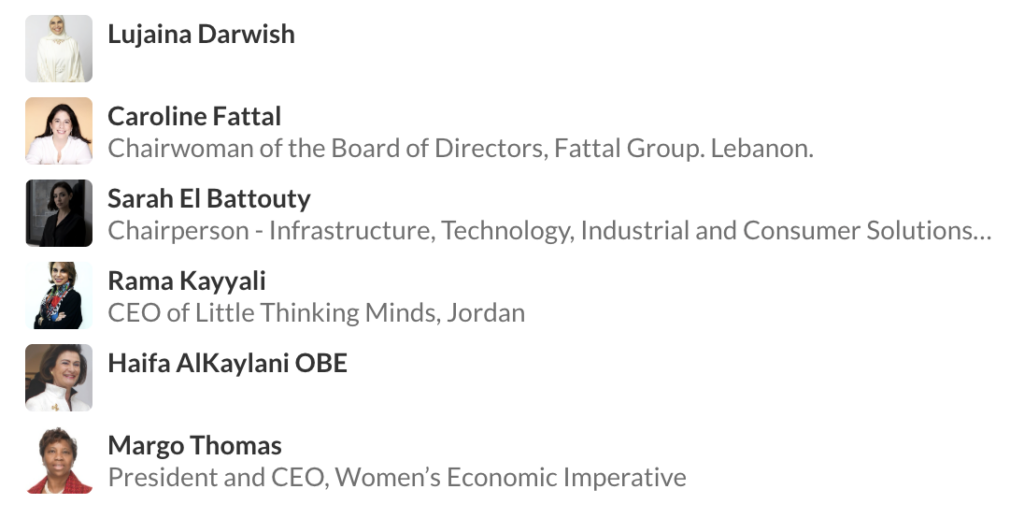

This panel, organized by the Arab International Women’s Forum (AIWF) in collaboration with the International Panel for Social Progress (IPSP), explored the growing role of women entrepreneurs in driving economic transformation in the Middle East and North Africa (MENA). AIWF, founded in 2001 and celebrating its 25th anniversary in 2026, promotes women’s empowerment through education, economic inclusion, and entrepreneurship.
Across the MENA region, women are increasingly contributing to economic diversification, innovation, and job creation. Rising female participation in higher education and STEM fields has produced a new generation of highly educated, technologically literate women capable of building businesses with both economic and social impact. Many women-led ventures are addressing societal challenges while contributing to the Sustainable Development Goals.
Despite this progress, significant barriers remain. Women-led startups receive only 1.2% of venture capital in the MENA region, slightly below the global average of 2%. Structural challenges include limited access to finance, restricted professional networks, regulatory constraints, and social expectations affecting women’s mobility and career opportunities.
Speakers highlighted the resilience of women entrepreneurs operating in difficult contexts. Caroline Fattal described the Lebanese entrepreneurial ecosystem, which has faced financial collapse, political instability, and the Beirut port explosion. Despite these challenges, women entrepreneurs have developed innovative responses. Examples include a flower company that created a home-delivery subscription service during the COVID-19 lockdown, entrepreneurs producing Lebanese limoncello using local citrus, and fashion designers developing upcycled products now sold internationally. These cases demonstrate that successful entrepreneurship often emerges from crisis and resourcefulness rather than ideal conditions.
Access to finance remains a major barrier. Rama Kayyali noted that many women entrepreneurs create impact-driven or social businesses, which venture capital investors often view as less attractive than sectors like fintech or e-commerce. Women therefore struggle to secure investment. She also highlighted the male-dominated nature of investment ecosystems, where pitching to all-male investment committees can be intimidating. Fundraising often requires frequent travel or relocation, creating additional challenges for women with family responsibilities. Strong role models and mentorship networks are therefore essential to encourage more women entrepreneurs.
Technology and AI present both challenges and opportunities. Sarah El Battouty emphasized that many entrepreneurs must quickly adapt to new digital tools, even after developing expertise in other fields. While AI systems remain largely designed by men, women entrepreneurs can use these technologies to improve forecasting, expand markets, and scale businesses. Increasing women’s participation in technology education and innovation is crucial to ensure more balanced representation in the future tech ecosystem.
The panel also discussed how MENA entrepreneurs can compete globally. Caroline Fattal argued that the region’s economic and political volatility fosters resilience and adaptability, which can become competitive advantages. Many entrepreneurs operate across languages and regulatory systems, helping them navigate international markets. Examples include Lebanese designers and restaurateurs who have successfully expanded their businesses globally.
Speakers emphasized the importance of cross-border collaboration and policy reform to strengthen women’s entrepreneurship ecosystems. Greater regional cooperation could facilitate the circulation of mentorship, capital, and expertise. Key policy priorities include improving access to finance, supporting women’s workforce participation and mobility, and encouraging corporations to procure from women-led businesses. Sarah El Battouty stressed that policies must be locally adapted rather than imported from other contexts.
Rama Kayyali identified four priorities to expand women’s entrepreneurship: strengthening STEM education for girls, increasing women’s workforce participation, expanding entrepreneurship programs and accelerators, and improving access to finance. Addressing these areas would significantly increase women’s participation in the region’s economic transformation.
Overall, the discussion highlighted the resilience, innovation, and leadership of women entrepreneurs in the MENA region, and the importance of supportive ecosystems, policies, and regional networks to unlock their full economic potential.
Reimagining Purpose-Driven Entrepreneurship and Technological Innovation in Africa

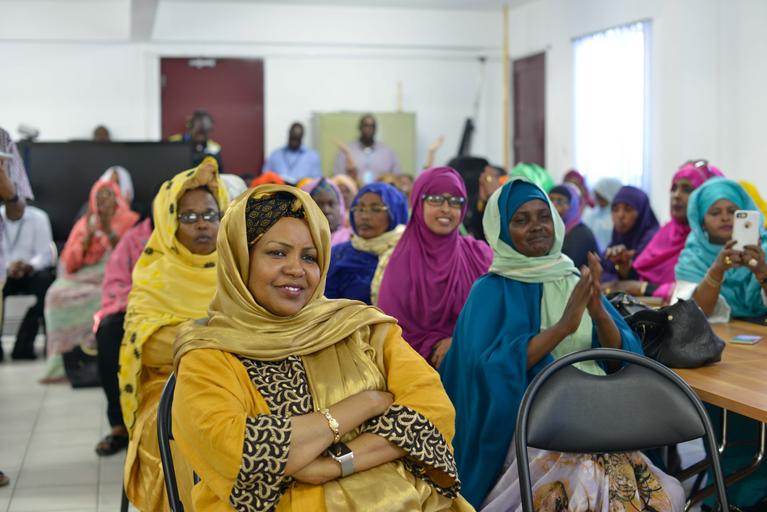
The discussion explored how purpose-driven entrepreneurship and technological innovation can contribute to inclusive economic transformation across Africa. Participants emphasized that the continent stands at a critical demographic and technological moment. With the majority of its population under the age of 25, Africa faces both a major challenge in terms of employment creation and a significant opportunity to harness the energy, creativity, and technological capacity of its young population. Innovation in areas such as artificial intelligence, blockchain, and digital platforms is already enabling new forms of entrepreneurship that address challenges in sectors including public services, finance, agriculture, and education.
A central theme of the conversation was the need to shift the perception of entrepreneurship away from a survival strategy toward a driver of systemic change and social impact. Many entrepreneurs across the continent still operate in difficult environments characterized by limited access to finance, weak support systems, and fragmented ecosystems. As Johannes Yimbesalu Gerald Chirinda highlighted, entrepreneurship in many African contexts is still viewed primarily as a means of survival rather than as a pathway to long-term social transformation and economic innovation.
Education and skills development were identified as essential foundations for this transformation. Preparing young Africans for the future of work requires not only formal education but also the development of entrepreneurial thinking, technological literacy, and the ability to adapt to rapidly evolving digital environments. James Mulli emphasized that human capital remains the most important asset for economic progress, arguing that education is the “silver bullet” for enabling innovation and entrepreneurship and for allowing individuals to create employment rather than simply seeking it.
Another important issue raised during the discussion was the relationship between governments, private actors, and innovation ecosystems. Effective public–private partnerships can play a critical role in enabling technological progress, but governments must focus on creating enabling frameworks rather than controlling entrepreneurial processes. Helen Chalitsa pointed out that bureaucratic obstacles, political interests, and weak implementation of policies often prevent partnerships from translating into concrete opportunities for entrepreneurs, despite the existence of strong potential collaborations and international interest.
Trust emerged as a recurring concern across the panel. Many participants noted that low levels of trust between citizens, governments, investors, and entrepreneurs create barriers to collaboration and investment. Without trust, innovation ecosystems struggle to scale, and domestic capital often flows abroad instead of supporting local initiatives. Erioluwa Adeyinka stressed that trust deficits—particularly between young people and public institutions—limit the effectiveness of government programs and discourage local investors from backing young entrepreneurs.
The conversation also highlighted the growing importance of digital sovereignty and control over data. As African entrepreneurs increasingly build services on global digital infrastructures, questions arise regarding who ultimately owns and benefits from the data generated on the continent. Eldrid Jordan warned that Africa may face a form of digital colonialism if it remains dependent on foreign platforms and infrastructures, arguing for more balanced partnerships with global technology companies that allow African countries to retain control over their digital ecosystems.
Finally, the discussion addressed the need for greater access to financing and risk capital for innovation. Entrepreneurship ecosystems require funding mechanisms that allow experimentation and accept failure as part of the innovation process. David Ogu emphasized that beyond financial constraints, one of the most significant barriers to progress is mindset: African societies must increasingly recognize their capacity to solve local problems with local talent, resources, and ideas.
Overall, the panel underscored that Africa’s future will depend on strengthening human capital, building trust across institutions, enabling fair digital partnerships, and supporting entrepreneurs with the resources and freedom to innovate. By aligning technological development with inclusive policies and purpose-driven entrepreneurship, the continent has the potential to transform its demographic and digital advantages into sustainable economic and social progress.
Extractivism, Environment and Human Rights


Defining extractivism and its global structure
The discussion opened with Leticia Merino outlining the key features of extractivism:
1. High intensity of natural resource extraction, including minerals and hydrocarbons, as well as large-scale agricultural monocultures based on widespread deforestation, water extraction, and soil depletion.
2. In the Global South, most resources are exported, aiming to meet the demands and needs of countries and regions other than those where extraction takes place.
3. Resources are mostly extracted as raw materials with low or no value added. Extraction sites tend to be specialized enclaves with no economic diversification or vertical integration, unlike other world regions that capture most of the production value.
4. Raw materials are traded on global commodity markets, where they are treated as homogenized economic goods, considered equivalent regardless of where and how they are produced. Prices are set by global financial markets.
5. Extractive operations are glocal: global corporate initiatives implemented in local territories. They are carried out by transnational corporations, meaning decisions about investment, project implementation, extraction intensity and volume, destination markets, infrastructure construction, environmental management, and even labor policies are made in corporate offices in Canada, the US, China, or Australia—far from extraction sites and largely disconnected from the realities of affected territories and populations.
6. Extractivism generates major environmental and social impacts, imposed on people and communities where extraction occurs, often affecting vulnerable and Indigenous groups. Environmental impacts are so severe that some authors refer to extractive territories as sacrifice zones, affecting not only ecosystems but also the geology of the Earth.
These resources are exported as raw materials with little value added, while profits are largely captured by transnational corporations. She stressed the “glocal” nature of extractivism: decisions are made in distant corporate centers, disconnected from local realities. This model produces severe environmental and social impacts, often turning extraction areas into “sacrifice zones,” while poverty persists or worsens despite vast profits generated globally.
Structural inequalities and neo-colonial dynamics
Merino emphasized that extractivism operates within deeply unequal economic and political systems, rooted in historical asymmetries. The contrast between massive corporate profits and persistent poverty in resource-rich regions illustrates this imbalance. She also noted that the invisibility of these dynamics allows extractivism to continue. Hugo Romero reinforced this by arguing that current extractive practices reproduce colonial relationships, extending beyond minerals to include water, biodiversity, and even knowledge systems.
Human rights violations and community resistance
Jorge Pelaez focused on human rights, highlighting violations of Indigenous self-determination and territorial rights. Even when consultation processes exist, they are often symbolic or manipulated to legitimize predetermined outcomes. Rights to information, participation, and a healthy environment are routinely undermined. In response, communities develop resistance strategies that evolve from awareness of harm to collective mobilization, often relying on direct action—such as blockades—due to distrust in institutions.
The energy transition as a new driver of extractivism
A central theme was the paradox of the energy transition. Hugo Romero argued that it reflects the priorities of developed countries seeking to address climate change without altering consumption patterns. This transition intensifies extractivism, particularly for minerals like lithium and copper, which require massive water use and generate environmental degradation. Rather than reducing inequalities, the transition risks deepening them by externalizing costs to vulnerable regions.
Local impacts and limited benefits
Absai Vatuva illustrated these dynamics through the case of Namibia. While mining contributes significantly to GDP and government revenue, local communities see limited benefits. Environmental degradation, water scarcity, and abandoned mining sites persist, alongside unemployment and social challenges. Corporate social responsibility initiatives exist but lack strategic integration, leaving communities excluded from value chains.
Policy responses and implementation challenges
Gerald Arhin discussed attempts by African governments to address these inequalities through policies such as export bans and value-addition strategies. However, implementation remains weak due to capacity constraints, political instability, and external geopolitical pressures. Even initiatives like profit-sharing agreements often remain symbolic rather than transformative.
Points of agreement and broader reflections
Across the discussion, speakers converged on several key points: extractivism is inherently unequal, environmentally destructive, and deeply tied to global economic structures. There was strong agreement that “there is no sustainable mining,” as repeatedly emphasized by Merino and echoed by others. The energy transition, in its current form, does not challenge consumption patterns and therefore reproduces the same extractive logic.
Takeaways and proposed directions
The main takeaway is that addressing extractivism requires systemic change rather than technical fixes. Suggested responses included stronger regulation, genuine community participation—including the right to refuse projects—and a shift toward circular economy approaches to reduce demand for new extraction. Hugo Romero and others stressed the critical role of academia in producing accessible knowledge for communities and supporting territorial defense. Ultimately, the discussion highlighted the need to move beyond purely economic thinking and integrate ethical, environmental, and social considerations into decision-making.
DAY FOUR
Human Security, Public Health and Population Wellbeing
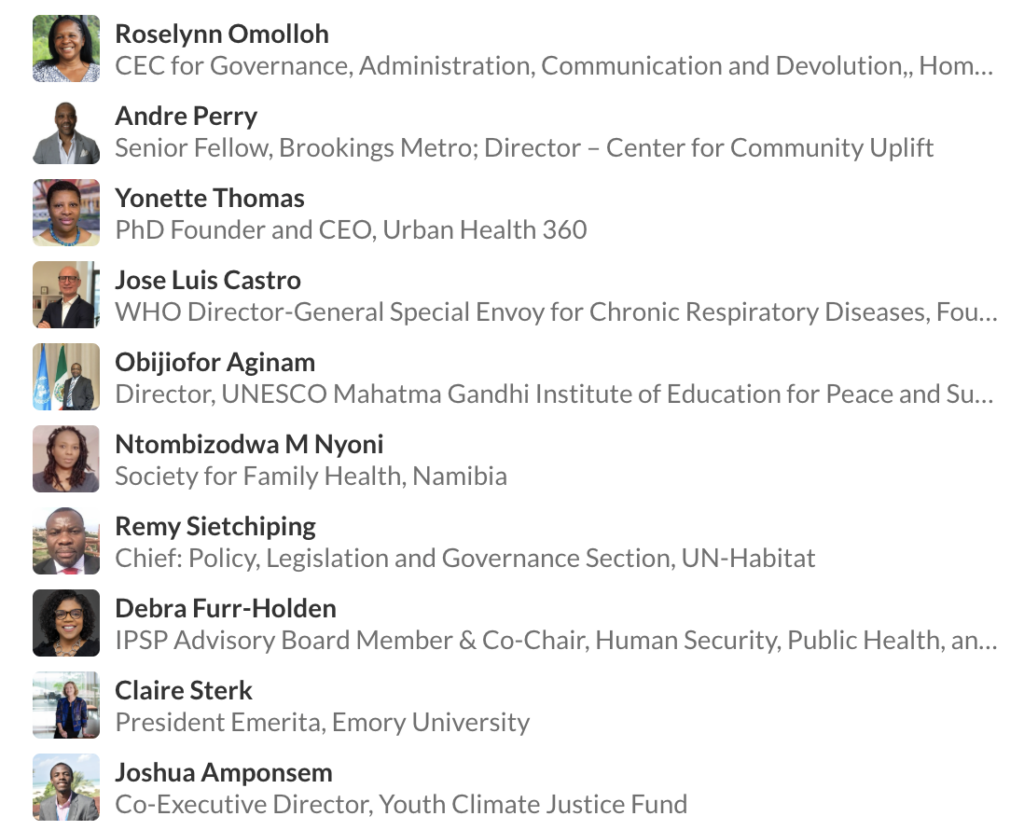

The opening plenary contextualized the intersecting core areas of human security, public health, and population wellbeing as critical to human flourishing, quality of life, and social progress in communities, municipalities, countries, and the world. The objective of this session was to interrogate structural drivers such as housing, environment, health economics, governance, climate, health, and population dynamics.
Human Security and Public Health Systems Resilience
The speakers highlighted the power of resilience in public health leadership, not as an emergency response to a crisis when systems fail, but as a predictive indicator before a crisis arises. They also reflected on how institutions in modern history during the post-Cold War were designed to be linear, steady, well-funded, and to help people survive. Global health governance policy frameworks reflect nationalistic, protectionist, and isolationist views. But now, post-COVID, institutions should redesign these frameworks and do more to protect lives beyond survival. Survival alone is not a measure of social progress; the end goal is human flourishing. In the global south, national communities are reclaiming and building agency, legitimacy, and imagination, moving from reaction to readiness, especially after losing trust, as one of the biggest lessons. Trust was lost during the pandemic and was seen in vaccine apathy, for example. Health inequalities in vaccine distribution saw countries prioritise their populations first before sharing it with the global south, yet the world is interdependent, and pathogens do not respect state sovereignty. It is clear to highlight that most of the activities that influence public health outcomes are outside the health sector, seen in international economic relations with strategic interests from individual countries.
Building these broken trusts is one way to start reconstructing the pillars of global health governance to reflect interstate policies and international decisions, including a space for non-state actors.
Human Security and Young People
Human security among young people has been fragmented amidst climate change and a lack of political and financial will to hear from them. A rise in anxiety is systemic and not individual, as young people respond to overlapping crises such as climate disasters, poor governance, and shrinking civic space. Therefore, protecting civic spaces is a key demographic move for young people to safely participate in shaping a society that benefits them. Another key point is to bring interventions to the community level, interconnecting the various sectors that are affected. This reinforces youth leadership investment and a holistic well-being approach.
Human Security and Ethnicity
A discussion reflecting on African Americans’ experiences in explaining the Black Progress Index in the United States. Findings of a study, translated into a book, Black Power Scorecard, aim to shift focus from what harms African Americans to what makes them thrive, defying policies that harm them. Defining power as the ability to live out one’s natural life, the study used Lasso regression to analyze extensive datasets and identify the strongest predictive factors of Black life expectancy. Key factors included income, home and business ownership, education, environmental quality, safety, and the presence and proximity of Black immigrants. Comparing Black communities to one another to discover where thriving is already happening and to learn from those successes. And systems should build policy agendas based on strengths rather than disparities, promoting collective wealth-building strategies such as community ownership of real estate, and identifying local policies that can be resourced and scaled. Ultimately, calling for investing in proven local strategies that support long-term community well-being and collective prosperity.
Policy Frameworks and Practice
Focusing on policy frameworks alone does not translate into practice. Because most policies that exist are written without the benefit of evidence from practice. While there are so many levels of policy, a people-driven approach aligned with indigenous knowledge rather than institutional policies is often most effective. Additionally, a key aspect of the resilience of policies is that instead of focusing on revisions and rewriting, retooling the people who are implementing the policies more often happens. Also, policy formulation should start at a family level, in a home, building on behaviour and relationships. This reflects the value of starting at a local level.
Human security, public health, and well-being are all interconnected pieces that need to be strengthened for change to happen.
Focusing on single disease programming has often led to poor outcomes, because health alone is so complex. For example, Namibia, a country with one of the smallest and youngest populations, still has high rates of youth unemployment and disease burdens such as HIV. This is also affected by the extreme hot weather patterns that affect the storage of medication in some parts of the country.
Call to Action
Because health is beyond medicine, a call to action is directed to moving from charity to equity, strengthening locally led systems, from silos to integration, building the one health approach embedded in WHO’s evolving vision of One Health, and lastly from short-term to long-term initiatives, embracing quality of health. All stakeholders involved, including governments, civil society organisations, academia, and the private sector, must reimagine institutions not as providers but as enablers for human potential in humility and impact. Those who treat uncertainty as data, who plan feedback rather than forecasts, and appreciate resilience.
A call to action is to have community members, including youth, get involved in policymaking and implementation. Often, when these groups are left out, it becomes very difficult to make positive changes. GenZs, for example, advocate against policy changes that do not work for their communities. In Kenya, GenZ were not part of the decision-making process, and so they used force and media to protest.
Multilateral agreements focus more on programs and less outcomes. So, moving away from power at the top to local processes can define practices that can be made into sustainable policy.
Human Security, Public Health and Population Wellbeing: Environmental Determinants, Climate Equity, Literacy & Resilience
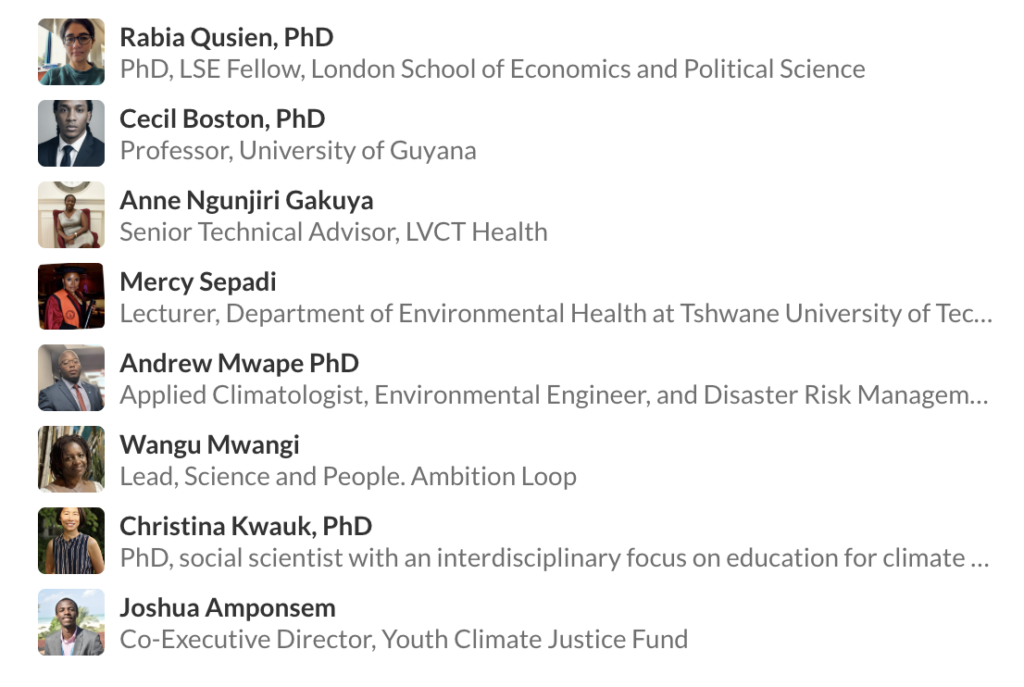

The objective of this session was to describe climate impacts on economies, public health, and population well-being, highlight vulnerability and resilience through a lens of climate communication and literacy.
Climate change, cutting across public health, the environment, and human security, is one of the threats the world is facing right now. For example, in Zambia and South Africa, recurring droughts are devastating farmers. In the Caribbean, hurricanes are overwhelming already stretched health systems and increasing diseases like dengue.
Speakers discussed that one of the most effective ways of addressing this threat is by collaborating with local communities, leveraging indigenous knowledge. For example, the Rotary club collaborates with community members in sub-Saharan Africa, including women and young people, to build global peace in conflict areas and help farmers restore forests.
The effects of climate change disproportionately affect women and adolescent girls, and so it is critical to respond to this with a gender lens. Women who also play a critical role as primary caregivers are impacted the most, leading to gender inequity. When this is not addressed, it leads to inadequate climate resilience.
There are also systemic gaps: governments, researchers, and NGOs often work in silos; climate information rarely reaches communities in accessible ways; indigenous knowledge is overlooked; and climate finance mechanisms frequently fail to reach local actors. Political will remains inconsistent.
Collecting stories and lived experiences from such populations helps in developing policies that respond to the needs. For example, LVCT, a local NGO in Kenya, uses epistemic justice to bring stories and lived experiences of women and girls into policy. That way, action plans that are developed directly address the needs and best practices of local communities.
Gender-transformative research is helping bring lived experience into policy spaces. There were strong calls for blended financing models that align business incentives with community resilience, and for integrating climate and health education into professional training.
Call to Action
Speakers emphasized community-driven action, such as planting, watershed protection, and community health promoters who connect last-mile households to services. Supporting gender-transformative research to help bring lived experience into policy spaces. There were strong calls for blended financing models that align business incentives with community resilience, and for integrating climate and health education into professional training.
Towards a Regenerative Democracy:
Engaging citizens in education, at work and globally
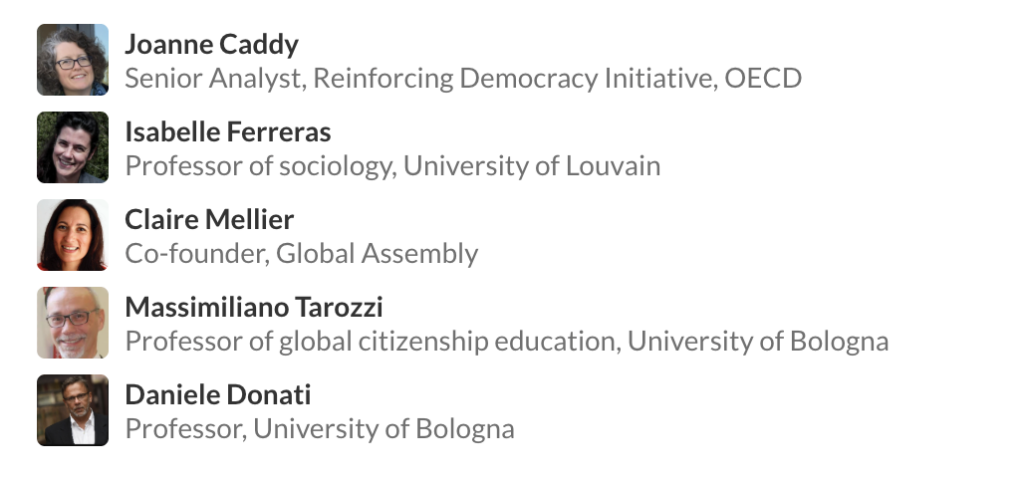

The discussion explored the concept of regenerative democracy as a response to the growing crisis of democratic institutions and the need to move beyond diagnosing democratic decline toward developing practical pathways for renewal. Participants emphasized that democratic systems today face declining trust, polarization, and institutional disconnection from citizens, but that new forms of participation emerging in everyday spaces offer opportunities to regenerate democratic practice. Joanne Caddy framed the session by arguing that democratic renewal should not focus only on elections or formal institutions but on “everyday democracy,” where citizens develop agency and democratic skills in schools, workplaces, and local communities.
A central theme was the importance of recognizing that democratic participation already exists in many forms outside traditional institutions. Claire Mellier highlighted that across the world there is a vast but often overlooked ecosystem of citizen participation emerging from grassroots initiatives. Communities are increasingly organizing themselves in response to social, ecological, and economic crises, creating bottom-up spaces of democratic action that can reconnect local engagement with global governance processes such as climate negotiations.
Education was presented as a key driver of democratic renewal. Massimiliano Tarozzi argued that democracies remain the most effective political systems for addressing the inequalities and interconnected crises shaping the contemporary world, but that their survival requires a transformation of civic education. He emphasized the need to shift from traditional civic education toward global citizenship education, empowering individuals to act as agents of change capable of linking local experiences with global responsibilities.
Another important dimension concerns the evolving role of citizenship itself. Daniele Donati stressed that democracies must move beyond viewing citizens as passive voters and instead recognize them as active contributors to community well-being. This requires updating democratic rights to reflect contemporary challenges, including environmental rights and new rights related to information and digital governance, given the growing influence of algorithmic platforms in shaping public opinion.
The discussion also highlighted that democratic regeneration requires collaboration across sectors and actors. Building a common agenda among governments, civil society organizations, educators, and researchers is essential but difficult because these actors operate with different priorities and institutional constraints. Participants noted that civil society organizations often play a critical role as intermediaries capable of bridging these divides and facilitating dialogue among diverse stakeholders.
Several speakers emphasized the importance of linking local and global dimensions of democracy. Local initiatives are where citizens experience agency and develop democratic practices, but these initiatives must connect to broader global governance systems if they are to influence structural change. Dialogue with actors in the Global South was also considered essential in order to avoid reproducing Global North dominance in discussions about democratic innovation.
Finally, the panel acknowledged that democratic participation must extend to domains often overlooked in democratic theory, including workplaces and other everyday institutional settings. These spaces offer opportunities for citizens to exercise democratic skills, but power hierarchies within organizations can limit open deliberation and highlight the challenges of translating democratic ideals into institutional practice.
Overall, the session concluded that regenerating democracy will require strengthening everyday participation, transforming education for active and global citizenship, redefining democratic rights in response to new social and technological realities, and building collaborative agendas that connect local initiatives with global governance efforts.
Modelos de Desarollo Necessarios para América Latina


The opening plenary contextualized the intersecting core areas of human security, public health, and population wellbeing as critical to human flourishing, quality of life, and social progress in communities, municipalities, countries, and the world. The objective of this session was to interrogate structural drivers such as housing, environment, health economics, governance, climate, health, and population dynamics.
Human Security, Public Health and Population Wellbeing:
Place & Synergized Epidemics


The objective of the session was to examine economic drivers, barriers to health access, explore equitable access to green and blue spaces, and address disease dynamics. The session opened with a powerful keynote story about “Zaini,” a 35-year-old woman who lives in rural Kenya. In one week, she receives HIV prevention, schistosomiasis treatment, cervical cancer screening, and family planning care, yet no one connects the dots. When she presents with blood in her urine, she is given antibiotics. What is missed is a syndemic: overlapping conditions of HIV, cervical cancer risk, and female genital schistosomiasis (FGS), all nteract and worsen each other. Syndemics are defined as two or more diseases that cluster and amplify each other in the same place, shaped by social and environmental conditions. The data shared was distinct: women with schistosomiasis have more than twice the odds of acquiring HIV; women with HIV are at significantly higher risk of cervical cancer; and severe genital schistosomiasis increases HIV risk three- to four-fold. In endemic areas of Kenya, one in three women examined had FGS, which is often misdiagnosed as an STI and treated incorrectly.
The speakers discussed that challenges are often defined as fragmented, siloed systems, political economy barriers, weak detection of complexity, place-based inequalities, and social determinants of health. The speakers emphasized that in many African contexts, social determinants of health such as poverty, displacement, climate stress, and weak primary care amplify both infectious and non-communicable diseases. Place predicts health as powerfully as genetics.
In fragmented and siloed systems, diseases are funded, managed, and tracked separately. Program managers and donors rarely coordinate. Health workers are trained to treat conditions, not people. This leads to missed diagnoses, antimicrobial resistance, and late-stage cervical cancer, for example. Funding streams are disease-specific, where pharmaceutical and research incentives reinforce vertical programs, making integration harder to finance and manage. Health systems track single diseases, not interacting burdens. Even in an era of AI, surveillance tools rarely capture syndemic patterns. This weakens the detection of syndemics.
The urban health experts noted that where people live shapes how they get sick. Rapid urbanization, informal settlements, pollution, and lack of infrastructure compound disease risk. Migration between rural and urban areas further complicates diagnosis and care.
Call to Action
The call to action focused on the provision of integrated service delivery with health care workers trained on syndemics, community-led and place-based interventions, urban, environmental, and participatory planning, and evidence-based knowledge exchange using integrated approaches within communities.
Human Security, Public Health and Population Wellbeing:
Local, Sub-National, National & Regional Policy Action

This session focused on how policy and governance at local, sub‑national, national, and regional levels can protect and promote human security, population well‑being, and public health. Framed with a strong Global South emphasis and a commitment to reciprocal learning across South–South and North–South partnerships, the discussion centered on how values, culture, participatory governance, laws, institutional practice, and budgets shape outcomes on the ground.
The central message was clear: Sustainable development cannot be delivered to communities; it must be built with them. Speakers stressed that place matters: communities, neighborhoods, municipalities, and counties are the primary arenas where policy translates into lived experience. Focusing on how local, subnational, national, and regional policy action can build resilience, especially at a time of shrinking global aid and growing uncertainty in global health financing. With major donors such as the United States, the European Union, and the United Kingdom reducing aid budgets, many low- and middle-income countries are facing tighter fiscal space. This shift demands stronger domestic funding systems, better coordination, and deeper community engagement. While global frameworks matter, it is local action that ultimately saves lives.
Many policies are developed at the national level without meaningful input from local actors. As a result, they are poorly understood, delayed in reaching communities, or simply “sit on the shelf” without implementation.
Ministries and sectors often operate independently, even when addressing interconnected issues. At subnational levels, committees exist on paper but lack coordination or incentives to function effectively.
Decentralization often transfers responsibility without transferring adequate funding or capacity, limiting the ability of local authorities to deliver.
Indigenous knowledge and lived experience are not consistently integrated into institutional practices. Vulnerable populations, such as people with disabilities, informal settlement residents, and cross-border communities, are frequently overlooked.
Health challenges such as HIV and TB do not respect borders, yet policies often prevent frontline health workers from collaborating across countries.
The speakers defined best practices and approaches to help bridge these challenges:
Involving communities in decision-making, particularly in how funds are allocated, improves accountability, reduces leakages, and strengthens trust. Examples from Kenya’s devolution and Nigeria’s recent public disclosure of primary healthcare funding illustrate this situation.
In Kenya, engaging community members as co-researchers helped identify the most vulnerable groups within informal settlements. This led to practical changes, including better access to social protection and local employment opportunities for people with disabilities. Small seed funding and technical support empowered local organizations to lead change cost-effectively.
Call to Action
Investing in people remains critical. Training, mentorship, and structured community engagement mechanisms improve long-term resilience.
Regional networks and professional groups are facilitating knowledge exchange and harmonizing public health protocols, particularly in HIV and TB services.
Organizations are increasingly recognizing that collaboration is not optional. Working across strengths such as research, implementation, and advocacy ultimately enhances impact and avoids duplication.
Human Security, Public Health and Population Wellbeing: Partnerships for Policy Action, Impact & Change

This session explored ways to integrate public health action – schools, civic groups, communities, while strengthening community, municipal, and county strategies & planning, and engaging multiple sectors – housing; transportation; water & sanitation; public works.
This panel brought together a shared conviction that partnerships are essential in advancing human security and public health. Across regions and sectors, speakers agreed that today’s challenges: climate pressures, pandemics, youth unemployment, fragile health systems, and structural inequalities are too complex for any single institution to solve alone. Real progress depends on deliberate, inclusive, and sustained collaboration.
The discussion was framed using the World Health Organization’s Policy Triangle, emphasizing that effective policy must align actors, context, content, and process. This was illustrated through the One Health approach, showing how COVID-19 exposed the deep interconnection between human, animal, and environmental health. The pandemic also revealed inequities between the Global North and South, particularly in vaccine distribution, while accelerating regional cooperation, such as the strengthening of the Africa Centres for Disease Control and Prevention. Her example of China’s malaria elimination, which was achieved through decades of coordinated political commitment, research investment, community engagement, and cross-border collaboration with partners like the World Bank and Global Fund to Fight AIDS, Tuberculosis, and Malaria, demonstrated how long-term, multisectoral partnerships can yield transformative results.
The speakers reinforced the importance of centering youth and marginalized groups as genuine partners rather than token participants. Young people, particularly young women, face intersecting vulnerabilities linked to climate insecurity, unemployment, and structural inequality. Effective partnerships must therefore be layered, connecting global actors with national institutions, local think tanks, civil society organizations, and community leaders. Trust-building, equitable power-sharing, and sustained engagement were highlighted as critical ingredients for meaningful partnerships.
Several challenges emerged. Political will remains a persistent barrier; without leadership and governance aligned with reform, even strong technical solutions fail. Fragmented systems, weak coordination mechanisms, capacity gaps, and inadequate knowledge-sharing structures further limit impact. In some contexts, structural drivers such as poor housing, environmental degradation, weak disaster preparedness, and economic instability compound public health risks. Participants also noted that partnerships often fail when roles are unclear, community voices are not institutionalized in decision-making, or engagement ends with project cycles rather than long-term system change.
Call to Action
Speakers proposed practical solutions: grounding advocacy in credible data and baseline evidence; identifying trusted champions who can bridge political divides; institutionalizing feedback loops that channel community voices into policy; strengthening local governance capacity; and investing in policy literacy so communities understand and claim their rights. Building coalitions, especially among youth, was seen as a way to amplify influence. Importantly, trust and relationship-building must precede demands for reform, positioning partners as constructive allies rather than adversaries.
Sustainable policy action requires persistence, integrity, and shared ownership. Change is most durable when communities, governments, researchers, and private actors co-create solutions, supported by strong data, inclusive leadership, and mechanisms for continuous learning across borders.
Human Security, Public Health and Population Wellbeing:
Transformational Education, Technology & Digital Innovation

This panel explored how transformational education, technology, and digital innovation can drive social progress, particularly in African and other Global Majority contexts. The collective view was clear: transformation is not simply about adopting new tools, but about reshaping mindsets, systems, and power structures so that education and innovation genuinely improve lives.
A central theme was the gap between knowledge and practice. While discoveries in AI, digital health, and science emerge rapidly, education systems often fail to integrate them quickly enough. Graduates enter workforces shaped by outdated models, creating tension between new skills and entrenched systems. Participants stressed the need for continuous learning, intergenerational dialogue, and mechanisms that ensure innovation translates into real-world impact, especially in health and community services.
Youth emerged as both a demographic reality and a strategic opportunity. With many African countries having predominantly young populations, speakers argued that young people are not just beneficiaries of innovation but its primary drivers. However, youth are often excluded from decision-making and innovation ecosystems
The discussion also highlighted structural challenges. Weak justice systems, limited regulatory frameworks, and slow policy responses undermine responsible innovation. In many contexts, AI governance, data protection, and digital health regulations remain underdeveloped. Without ethical guardrails, technology risks reinforcing inequality, misinformation, and exploitation. Participants emphasized that speed must not come at the expense of ethics, consent, and human-centered design.
Another major challenge is the huge dependency on external funding, Global North knowledge systems, and foreign technologies. Panelists questioned who defines legitimate knowledge, who owns data, and who ultimately benefits from innovation. Brain drains, limited local opportunities after training, and extractive data practices were identified as persistent barriers. Transparency, respect, and shared ownership were seen as essential to building trust and sustainability.
Call to Action
Solutions centered on co-creation and localization. Innovation should begin with communities defining their own problems, not merely testing pre-designed solutions. Living labs, community design processes, and adaptable technologies were highlighted as practical pathways. Local maintenance capacity, interoperability between systems, and integration with government structures were identified as critical for scale and sustainability.
Creating safe, well-resourced spaces, such as innovation and living labs, was proposed as a solution. These labs should enable experimentation, failure, co-creation, and long-term iteration, rather than demand immediate commercial success.
The collective takeaway was that transformational education must empower people to solve their own problems ethically and sustainably. Technology is a catalyst, not the solution itself. Real progress requires strong institutions, inclusive knowledge systems, accountable governance, youth-centered innovation spaces, and locally owned digital ecosystems. Only then can digital innovation truly advance social progress rather than reproduce existing inequalities.
Human Security, Public Health and Population:
Data Science, Data for Policy Action, Political Economy of Health Data

This discussion centered on how data systems, data science, and AI can be leveraged to advance equitable health policy, particularly in the Global South. The collective view was clear: data requires technical and political infrastructure. Who owns it, who funds it, who defines the indicators, and who interprets it ultimately shape whose lives improve and whose remain invisible.
A major highlight was the call for data sovereignty. Speakers reflected on the fragility of externally funded systems, using the disruption of USAID-supported Demographic and Health Surveys as a cautionary example. When core national data systems depend on a single foreign funder, countries risk losing decades of evidence overnight. This exposed a deeper imbalance: for years, survey design, analysis, and priority-setting have often been driven from the Global North, with limited transfer of analytical power to national institutions. The discussion urged a shift from extractive data models to locally governed, locally analyzed, and locally used systems, such as the more decentralized District Health Information System 2 (DHIS2) model.
Another key theme was the power of routine data for real-time decision-making. Examples from Zambia and Kenya showed how local data systems informed responses to tuberculosis screening, cholera outbreaks, maternal referrals, and health financing reforms. When district-level data is timely and actionable, it directly influences resource allocation and service delivery. Political will was identified as a decisive factor; where leadership prioritizes digital health and monitoring systems, progress accelerates.
Artificial intelligence emerged as both an opportunity and a risk. There was strong agreement that AI is reshaping health systems and workforce demands, but participants warned against passive adoption of externally built models. Without local participation in algorithm design and training data, AI systems risk embedding bias, misclassifying populations, or reinforcing inequities. Building domestic capacity in AI development, data science literacy, and ethical governance was framed as urgent. At the same time, contributors cautioned that AI depends on strong foundational data systems; without high-quality routine data, advanced analytics cannot function responsibly.
Several challenges were repeatedly emphasized. These include donor dependency, weak domestic financing for data systems, limited technical capacity, uneven policy prioritization of monitoring and evaluation, and political environments where data does not always drive decision-making. Another structural tension was highlighted: policy determines what data is collected, yet data is expected to shape policy. Without deliberate reform, this cycle can entrench blind spots and neglect marginalized issues.
Call to Action
Proposed solutions focused on long-term capacity strengthening rather than short-term project funding. Governments were urged to treat data infrastructure as sovereign national infrastructure. Development partners should shift support toward institutional strengthening and local analytical capacity. There were calls for stronger AI literacy among policymakers, ethical safeguards in technology adoption, community engagement in defining research questions, and sustained investment in monitoring and evaluation systems beyond disease-specific programs.
The overarching takeaway was that data collection alone is insufficient. Social progress requires ownership, analytical capability, ethical governance, and political commitment. Equity in health depends not only on having data, but on who controls it, how it is interpreted, and whether it meaningfully informs decisions at community, district, national, and regional levels.
DAY FIVE
Multilateralism today: crises and alternatives



The discussion examined the current crisis of multilateralism and its relationship with democratic instability, emphasizing that the weakening of international cooperation reflects deeper transformations in global power structures, economic systems, and social expectations. The panel highlighted that the multilateral order created after the Second World War—anchored in institutions such as the United Nations and the Bretton Woods system—was originally designed to re-embed globalization within shared rules and prevent the destructive dynamics that had led to global conflict. Fernando Filgueira framed the debate by noting that today’s crisis reflects the erosion of the mechanisms that once contained global economic and political forces, leaving nation-states increasingly unable to manage transnational challenges such as climate change, pandemics, and technological disruption.
Participants emphasized that the crisis extends beyond multilateral institutions to a broader erosion of international norms. Julio María Sanguinetti argued that the world is witnessing not only a crisis of multilateralism but a breakdown of fundamental principles of international law, including respect for state sovereignty and the binding nature of treaties. This weakening of global rules is intertwined with a deeper civilizational transformation driven by technological change, economic restructuring, and social insecurity, which has contributed to the rise of populism and the destabilization of democratic systems.
The conversation also highlighted the historical role of international institutions in shaping global development. Enrique Iglesias reflected on how organizations such as ECLAC and the United Nations helped integrate Latin America into the global economy and encouraged the region to understand its development within a broader international context. He emphasized that the growing interconnectedness of economies through trade, investment, and technological exchange has created unprecedented global interdependence, making international cooperation more necessary than ever.
Several speakers stressed that rebuilding multilateral cooperation will require renewed political leadership capable of responding to contemporary geopolitical realities. The panel noted that current conflicts and geopolitical tensions illustrate the fragility of the international order and the limits of existing institutions. Effective renewal of multilateralism may therefore depend on dialogue and strategic accommodation among major global powers, alongside reforms that better reflect the distribution of power in today’s world.
The discussion also considered the role of regional actors and smaller states. Uruguay’s diplomatic tradition and its forty years of uninterrupted democracy were presented as an example of how small countries can contribute to sustaining multilateral norms through consistent support for international cooperation and institutional dialogue.
Finally, the session reflected on the lessons of recent global crises. The COVID-19 pandemic illustrated both the deep interdependence of the international system and the weakness of global solidarity, as countries prioritized national access to vaccines rather than collective solutions. At the same time, participants suggested that such crises may generate learning processes that could eventually strengthen future cooperation.
Overall, the discussion concluded that while multilateralism is currently under severe strain, global interdependence, shared risks, and the need for collective problem-solving make some form of renewed international cooperation inevitable. The central challenge lies in adapting institutions, leadership, and norms to the realities of a rapidly changing world order.
Inspiring Behavioural Change for Social Progress

This session explored how behavioral science can inform social progress, public policy, and institutional reform, particularly within NGOs, international organizations, and public administrations. Speakers discussed how behaviorally informed approaches can complement structural reforms, improve policy effectiveness, and support systemic change while remaining attentive to ethical concerns.
What is behavioral science and why it matters
Behavioral science studies how people actually behave, rather than how they are assumed to behave under rational models. Drawing on psychology, economics, political science, and other disciplines, it seeks to identify cognitive biases, social norms, and structural barriers that shape decisions. Its goal is not manipulation, but simplification and facilitation, helping people overcome barriers that prevent them from acting in their own or society’s interest.
Behavioral science emphasizes evidence generation, testing, and learning. Even small changes matter if they move outcomes in the right direction. Failed interventions are not failures but sources of learning, clarifying what works and what does not.
Individual change (I-frame) vs systemic change (S-frame)
A central debate addressed the tension between focusing on individual behavior change (I-frame) and addressing structural or systemic conditions (S-frame).
Speakers stressed that individual change requires systemic change. Behavioral interventions cannot succeed if institutional environments are misaligned. For example, improving police responses to child abuse is insufficient if justice systems are not child-friendly or if social support systems are absent. Behavioral science must therefore be embedded within behaviorally informed theories of change that address laws, institutions, incentives, and norms together.
Behavioral science plays a critical role at the “last mile”, the interaction between systems and users. By reducing friction, simplifying procedures, and redesigning processes, it can improve how systems function without placing responsibility solely on individuals.
The role of social norms and context
Social norms are a key driver of behavior and vary significantly across contexts. Behavioral science has historically focused on WEIRD societies (Western, Educated, Industrialized, Rich, Democratic), but is increasingly applied in non-WEIRD contexts, where collectivism, informal practices, and local norms strongly shape behavior.
Examples included corruption, gender-based violence, and child protection, where behaviors cannot be understood or changed without accounting for social norms. Practices seen as corruption in one context may be perceived as social obligation in another. Behavioral science allows norms to be defined, measured, and addressed empirically, rather than treated as vague explanations.
Adoption challenges in NGOs and public institutions
While behavioral science is widely used in the private sector, adoption remains slower in NGOs and international public organizations. Key barriers include:
- Donor funding structures focused on outputs rather than behavioral outcomes
- Limited demand for rigorous evidence and experimentation
- Organizational complexity and risk aversion
- Discomfort with concepts such as experimentation and randomization in public contexts
Public institutions differ from private ones: they prioritize predictability, accountability, and legality over user experience, and cannot rely on financial incentives. Motivation in the public sector requires understanding non-monetary drivers of behavior.
A disconnect persists between academia and practice. Academic research is often insufficiently translated into accessible, actionable insights for policymakers, while policymakers underuse existing scientific knowledge.
Concrete applications and results
Examples demonstrated how behavioral science can deliver impact:
- Internal systems reform: Redesigning procurement, finance, and onboarding systems reduced friction, saved staff time, and improved satisfaction by changing systems rather than blaming users.
- Child labor reduction (Côte d’Ivoire): Addressing social norms through community-defined “village social contracts” reduced hazardous child labor from 44% to 12%.
- Justice and gender-based violence: Training judges and legal professionals to recognize emotional and cognitive processes improved victim-centered decision-making.
Key takeaways
- Behavioral science complements, rather than replaces, structural reform
- Small changes matter, but must be embedded in systemic approaches
- Social norms and context are essential to policy design
- Experimentation, testing, and learning are central to impact
- Donors, institutions, and academia must adapt to support evidence-based behavioral approaches
- The session concluded that systemic change requires champions, institutional buy-in, and behaviorally informed design, with behavioral science serving as a practical tool to bridge policy intent and real-world outcomes.
Care Economy and Public Policy: Measuring what we value
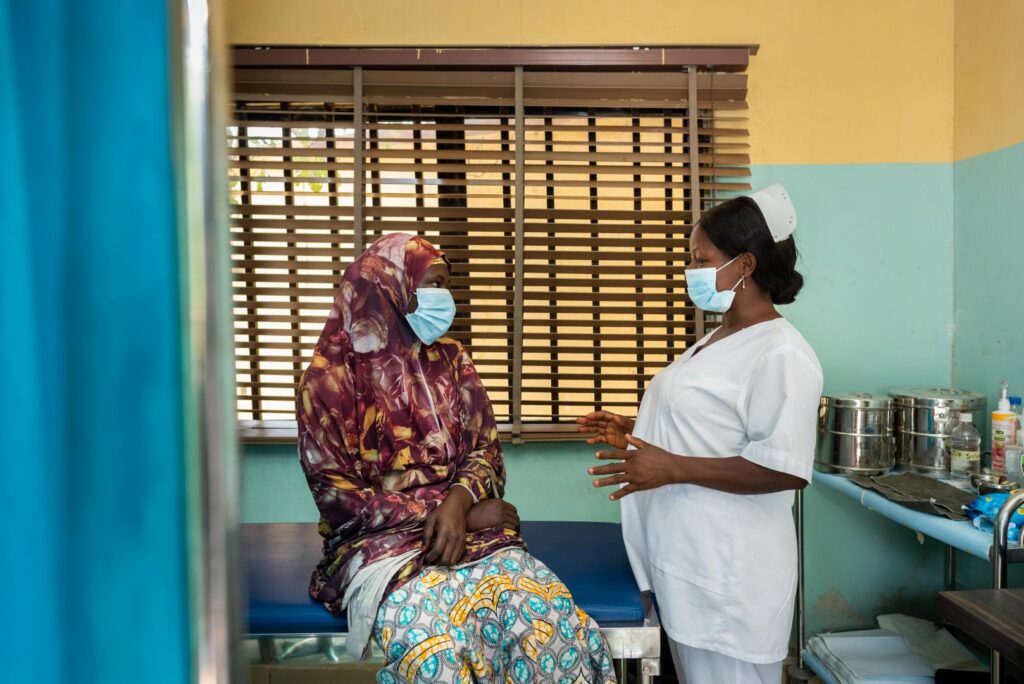
This webinar, organized by CIPEC and the International Panel on Social Progress (IPSP), examined the care economy as a central but historically invisible pillar of social cohesion, economic development, and sustainability. The discussion addresses how care can be better recognized, measured, and integrated into public policy, particularly in the context of demographic transition, gender inequality, and fiscal constraints.
Care work, both paid and unpaid, sustains life, enables wellbeing, and underpins economic productivity, yet it remains largely excluded from conventional economic indicators such as GDP and from public resource allocation. This exclusion creates a structural bias in development models, shifting the costs of social reproduction onto households, and disproportionately onto women.
Participants emphasized that care should be understood simultaneously as:
- A form of work with economic value;
- A human right and a public good;
- A shared responsibility among families, the state, markets, and communities.
Demographic change, declining fertility, population aging, and changing family structures, makes this invisibility increasingly costly. Children were described as intertemporal public goods: society benefits from their development, but families bear most of the costs. Without explicit recognition and redistribution of care, societies risk lower productivity, higher inequality, and unsustainable demographic trajectories.
Key Experiences and Evidence
A central experience discussed was Argentina’s Child-Rearing Basket (Canasta de Crianza), an index developed by the Ministry of Economy, the national statistics office (INDEC), and UNICEF. The index estimates the cost of raising a child by combining:
- The cost of essential goods and services; and
- The monetary value of unpaid care time required for child-rearing.
This tool emerged in response to widespread child support noncompliance in single-parent households—mostly headed by women—which face lower incomes, higher poverty, and severe time constraints. By assigning an explicit value to care time, the index provides courts with an objective reference to set child support payments and has already informed judicial practice and legal reforms in several provinces. More broadly, it demonstrated that care can be measured and used as a concrete policy instrument.
Complementary research from CIPEC showed that over 80% of resources invested in child-rearing come from families, roughly half of which is unpaid care work. The state contributes only about 20%. Children without developmental difficulties receive substantially more resources than those with difficulties, and women provide the majority of care inputs while having significantly less economic autonomy. These findings challenge income-based poverty measures and highlight households as key—but unsupported—producers of human capabilities.
At the macro level, speakers highlighted analytical tools such as National Transfer Accounts and Time Transfer Accounts, which reveal how excluding care from national accounts distorts assessments of growth, efficiency, and equity.
Policy Implications and Conclusions
Several shared conclusions emerged:
- Measurement is foundational: What is not measured remains invisible. Valuing care through indicators and accounts is a necessary step toward policy change, institutionalization, and accountability.
- Care is central to development: Investing in care is not only a gender or social policy issue, but a development strategy essential for productivity, demographic sustainability, social cohesion, and resilience—including in areas such as climate adaptation.
- Local implementation is critical: Care systems must be built from the local level, where services intersect with families’ real needs, while being supported by national frameworks and financing.
- Institutionalization and financing remain weak points: Despite significant advances in Latin America—including national care systems, regional agreements, and recognition of care as a human right—policies remain vulnerable to political change and chronic underfunding. Fiscal reform and sustained international cooperation are essential.
- Latin America offers a distinctive, feminist model: Unlike traditional welfare-state approaches, the region’s care agenda explicitly seeks to redistribute time, resources, and responsibility, but must be consolidated to endure backlash and austerity.
Placing care at the center of economic and social policy is not optional. In a context of demographic transition and growing inequality, failure to recognize and invest in care undermines both present wellbeing and future development.
Fireside chat:
Pathways to a better Future


The discussion explored how pathways to social progress can emerge despite current geopolitical tensions, technological disruptions, and weakening multilateral cooperation. The conversation emphasized that while the current global context is marked by crises and uncertainty, deeper trends, such as growing public dissatisfaction with existing economic and political systems and increasing support for global solidarity, indicate a strong demand for systemic change and provide a basis for long-term optimism.
A central theme was the transformative role of artificial intelligence and the risk that it could deepen existing inequalities if not governed properly. Gabriela Ramos highlighted that AI development is currently highly concentrated geographically, technologically, and socially, with a small number of countries controlling most breakthroughs and infrastructure. She argued that inclusive outcomes will depend on strong public investment in education, research, digital infrastructure, and institutional capacity so that countries – especially in the Global South – can shape technological development and apply it to concrete social challenges such as education, agriculture, and public services.
The conversation also examined the broader governance challenges associated with global public goods. Ravi Kanbur explained that collective action becomes more difficult in contexts of high inequality and when governance problems exist simultaneously at local, national, and global levels. He noted that many contemporary challenges, including climate change and cross-border development issues, are poorly addressed by traditional financing tools used by international institutions, such as sovereign loans, and suggested expanding grant-based mechanisms and strengthening regional development banks as more effective instruments for addressing cross-border public goods.
Participants also stressed that multilateral institutions ultimately depend on the political will of member states, and that in moments of limited global consensus, progress may come through coalitions of willing countries or regional initiatives that move forward on key issues while broader cooperation gradually rebuilds. The discussion highlighted that collective action is not limited to governments: civil society organizations, businesses, philanthropic actors, and research institutions increasingly shape global agendas and can influence policy decisions through advocacy, innovation, and the production of independent knowledge.
Overall, the session suggested that addressing global challenges such as technological disruption, inequality, and environmental crises will require coordinated action across multiple actors and governance levels. While current geopolitical conditions complicate cooperation, the growing awareness of shared global risks and the mobilization of diverse actors—from civil society to academia and business—offer potential pathways for rebuilding collective action and advancing social progress.
Event Wrap-up: Next Steps